
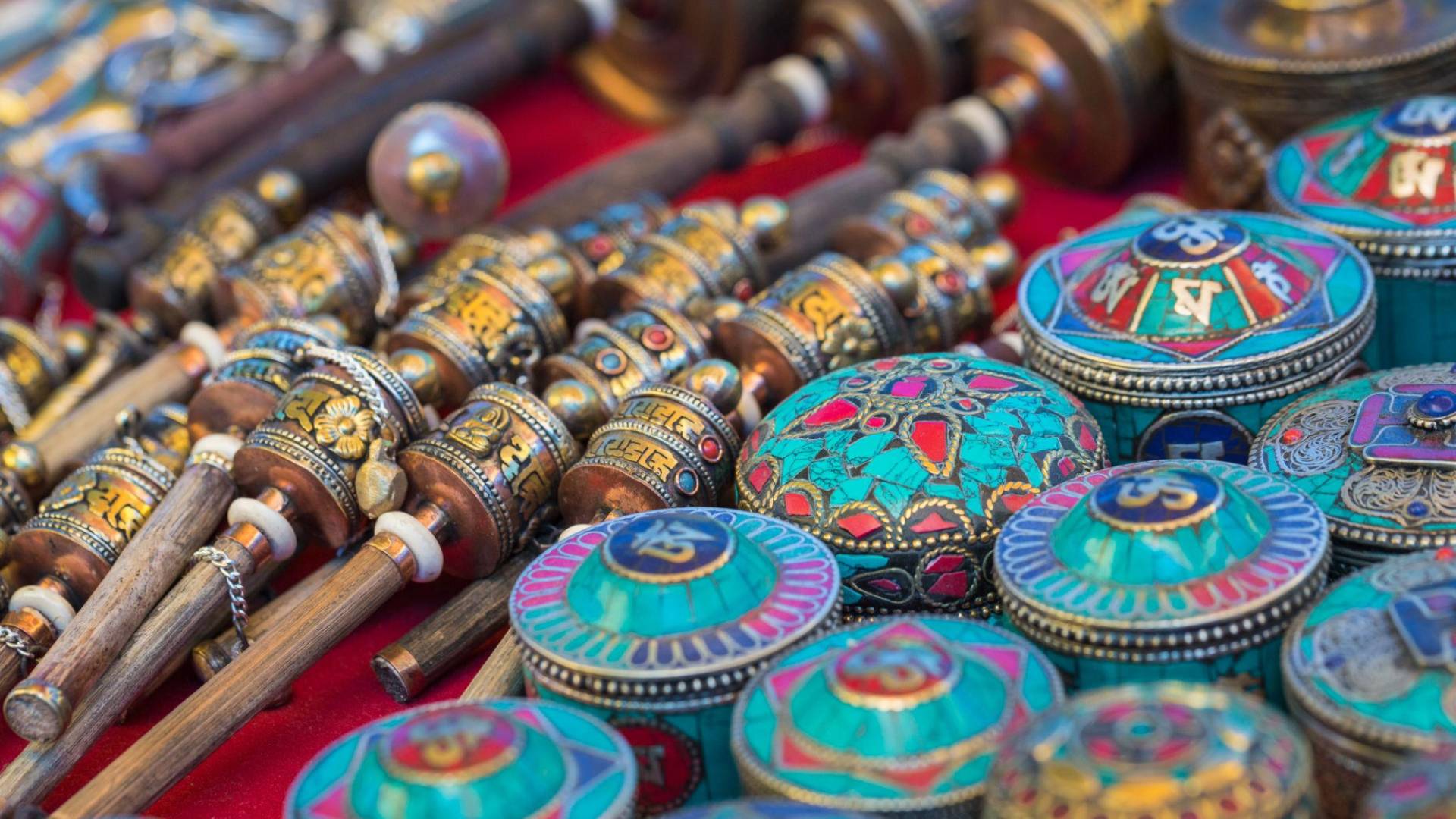
What can a handmade textile, a clay vessel or a carved wooden window tell us about the history of a place? In Ladakh, traditional crafts offer a glimpse into a way of life shaped by its geography, climate and cultural influences. Across its villages, generations of artisans have developed skills using materials found in their surroundings. Wool from sheep and Changthangi goats became essential for textiles, locally available clay was shaped into household pottery, while wood and metal found their place in domestic and religious objects.
These practices are closely connected to everyday life in the region. Many continue to provide livelihoods for artisan families, while others are being preserved through training and renewed interest in traditional craftsmanship. From the Pashmina-producing communities of Changthang to the pottery workshops of Likir, Ladakh’s craft traditions reflect a distinctive relationship between people, materials and their cultural environment.
Pashmina: The Changthang Tradition
Pashmina is among Ladakh’s most recognised traditional crafts. Its origins are closely associated with the Changthang plateau, home to the Changpa nomadic communities who rear Changthangi goats. These goats produce the fine undercoat from which authentic Pashmina is obtained.
The wool is collected during the natural moulting season and undergoes several stages of processing. After cleaning and sorting, the delicate fibres are spun into fine yarn and woven into textiles. The process demands considerable skill, particularly when handling the exceptionally fine fibres.
For Changpa families, Pashmina production is closely connected to their pastoral livelihood. The finished material is used to produce shawls, stoles and other garments.
Pashmina Wool of Ladakh received Geographical Indication (GI) registration in 2023, recognising its regional identity and the traditional knowledge associated with its production.
Wool Weaving and Textiles
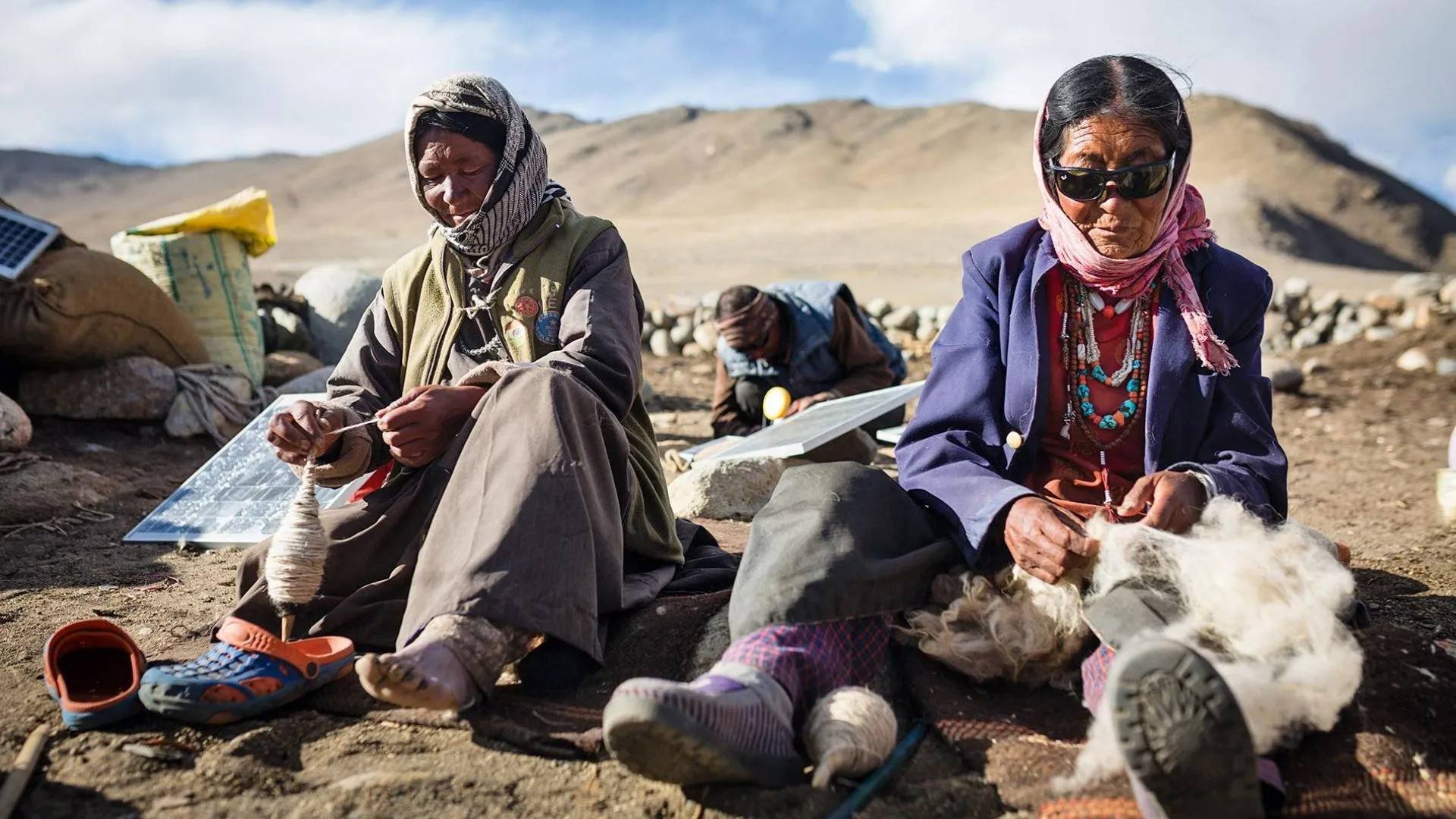
Wool has long been an essential material in Ladakhi households, particularly given the region’s cold climate. Sheep and yak wool have traditionally been used to produce garments, blankets and floor coverings for everyday use.
Traditional textile production involves spinning, weaving, knitting and tailoring, with techniques varying across different parts of Ladakh. Among the notable textile traditions are Tsug-Dul and Tsug-Gdan, which include woollen blankets and pile carpets made using sheep, yak and Pashmina wool. In Changthang, portable backstrap looms were particularly suited to the nomadic way of life. The resulting textiles feature patterns influenced by Ladakhi and Tibetan artistic traditions.
Other traditional forms include Challi textiles and Nambu, a woollen fabric associated with Ladakhi weaving. The goncha, a long woollen robe traditionally worn by both men and women, is another example of how textile craftsmanship remains closely connected to the region’s everyday life.
Thigma: Traditional Resist Dyeing
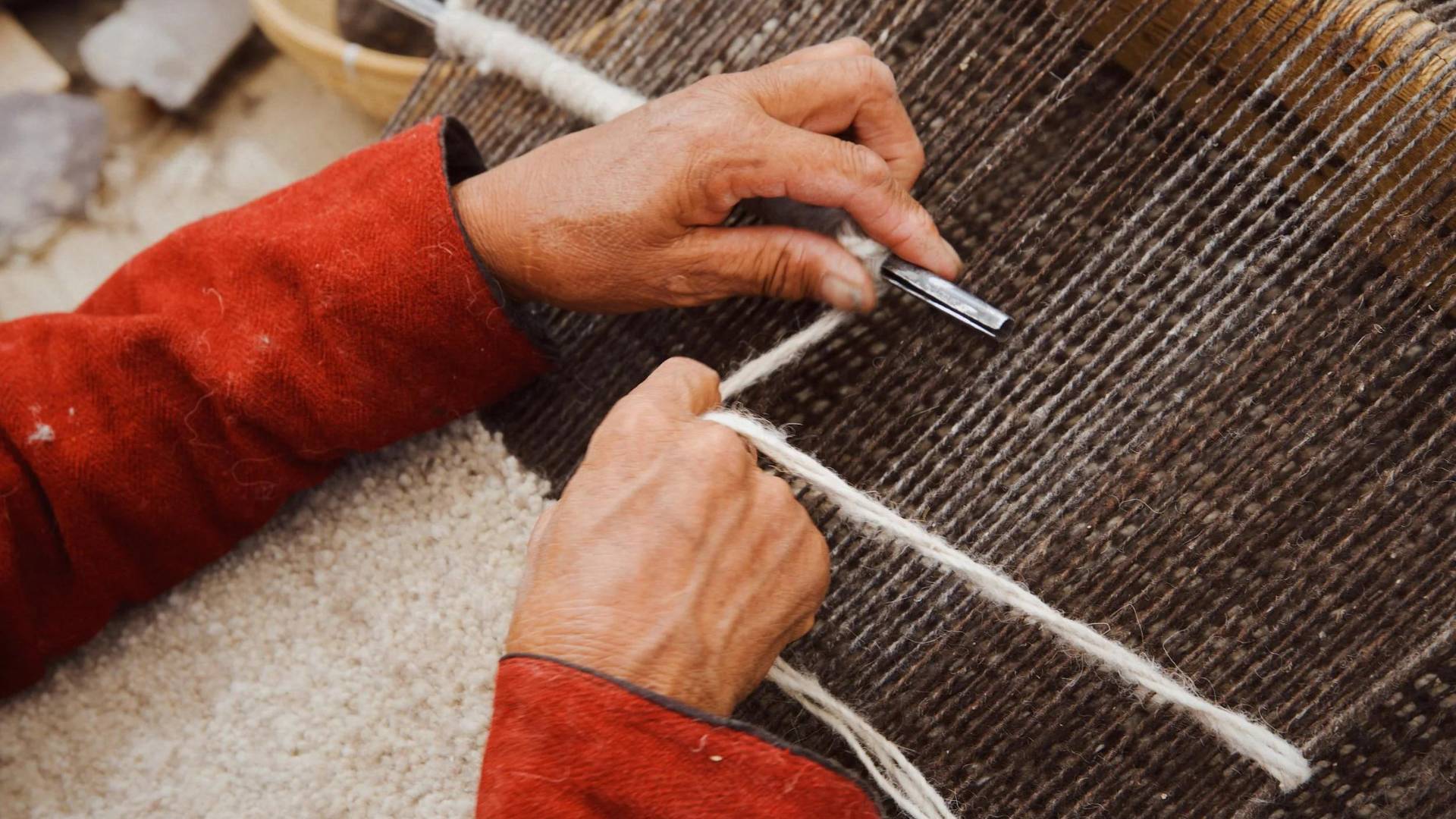
Thigma is a traditional textile dyeing technique practised in Ladakh. It involves tying or binding selected portions of fabric before dyeing, preventing colour from penetrating those sections. Once the bindings are removed, distinctive patterns emerge across the textile.
The final design depends on how the fabric is folded and tied before the dyeing process. Achieving consistent patterns requires careful preparation and considerable manual skill.
Traditionally used to decorate textiles and garments, Thigma represents an important part of Ladakh’s indigenous textile knowledge. The technique demonstrates how simple materials and skilled handwork can produce distinctive patterns.
Likir: Traditional Pottery
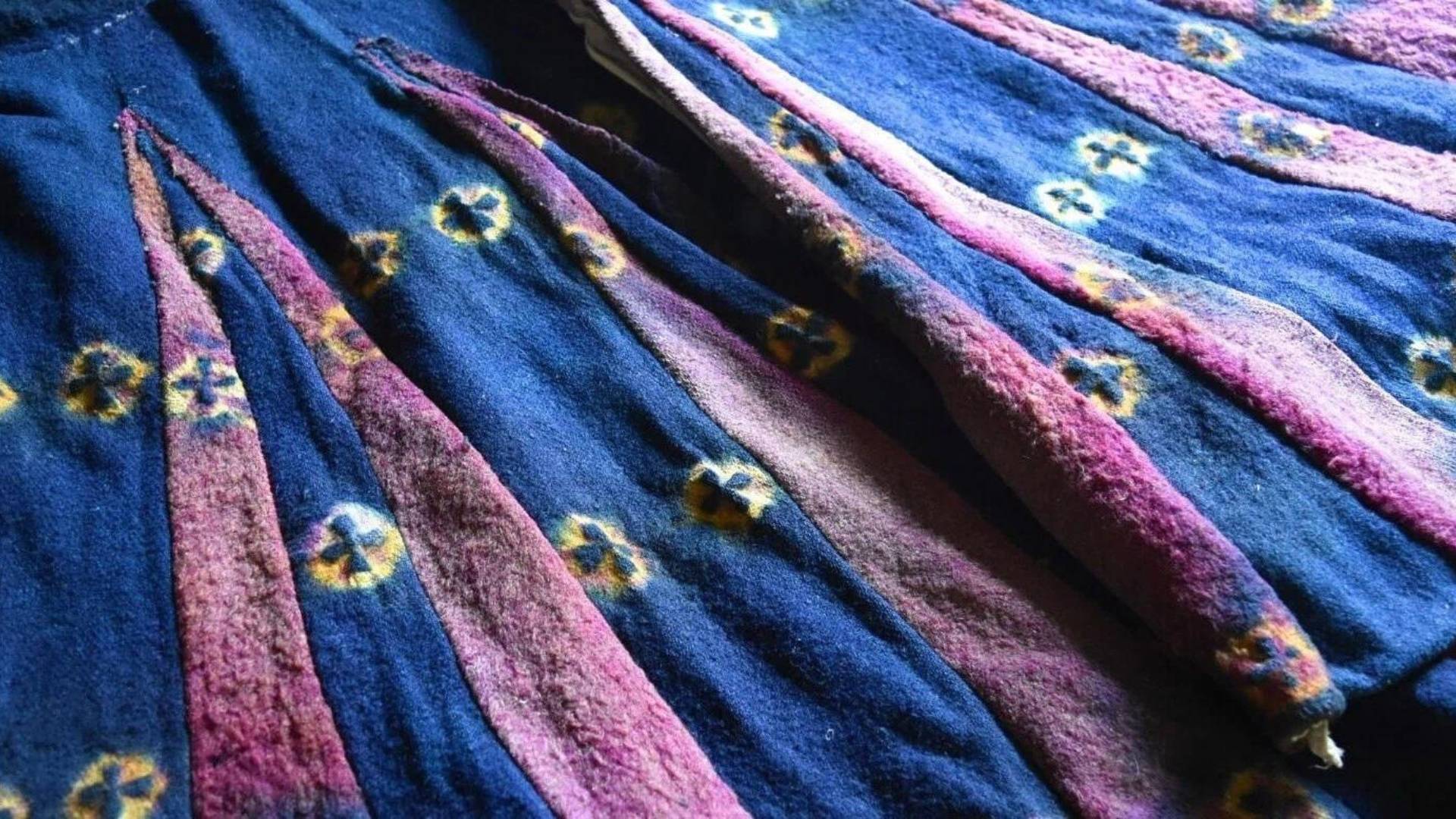
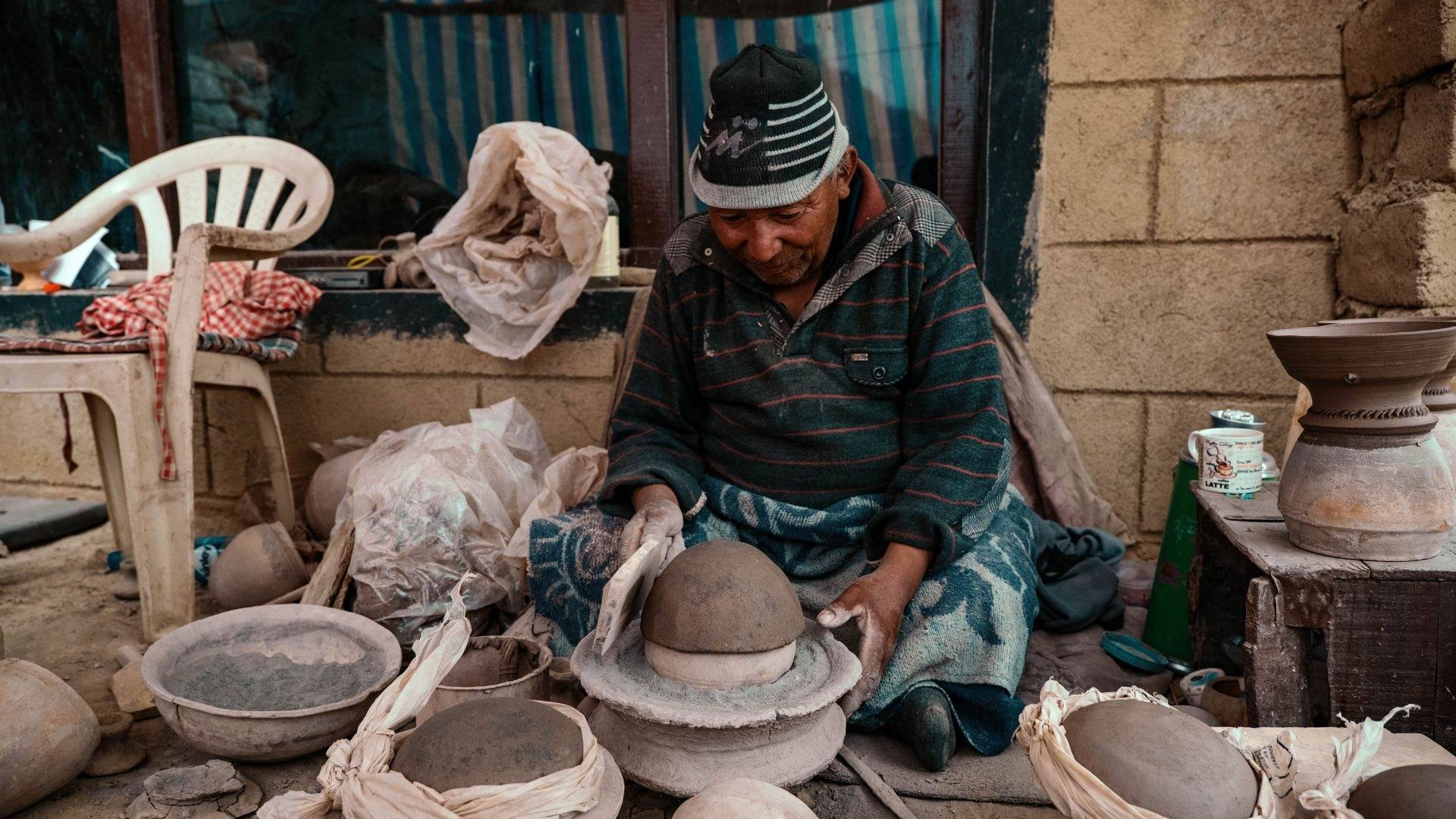
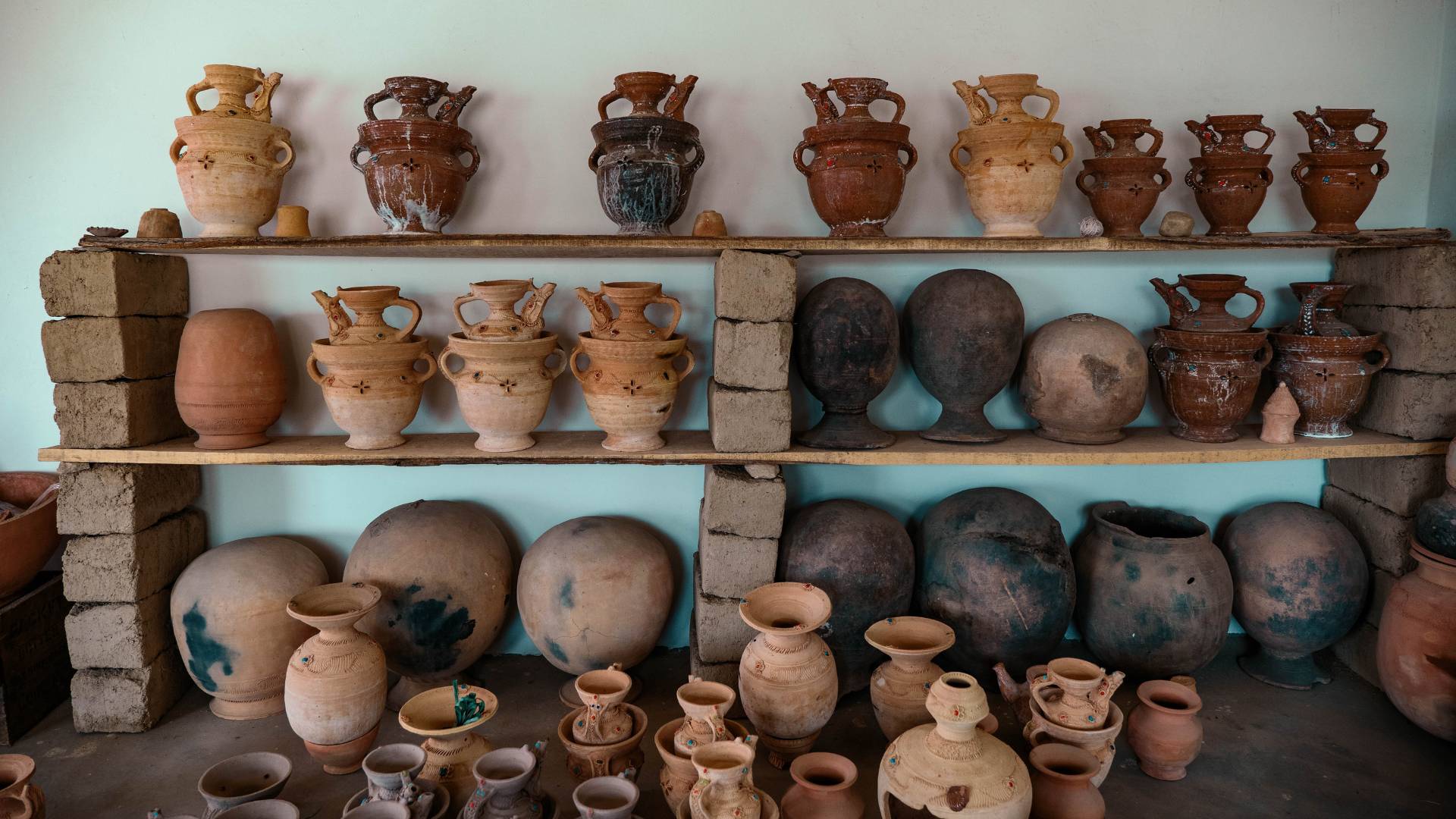
The village of Likir, situated in the Sham region of Ladakh, is particularly known for its pottery-making tradition.
Local artisans work with clay to shape vessels and other objects using traditional methods. Historically, pottery served practical household requirements, with vessels and utensils forming an important part of everyday life. Certain objects were also made for religious and cultural purposes.
The craft is traditionally passed down within families, with younger generations learning through observation and hands-on practice.
Likir Pottery has received Geographical Indication recognition, bringing greater visibility to this distinctive regional craft.
For travellers visiting Likir, a pottery session with a local artisan offers an opportunity to understand the process firsthand, from preparing the clay to shaping an object by hand.
Wood Carving and Craftsmanship
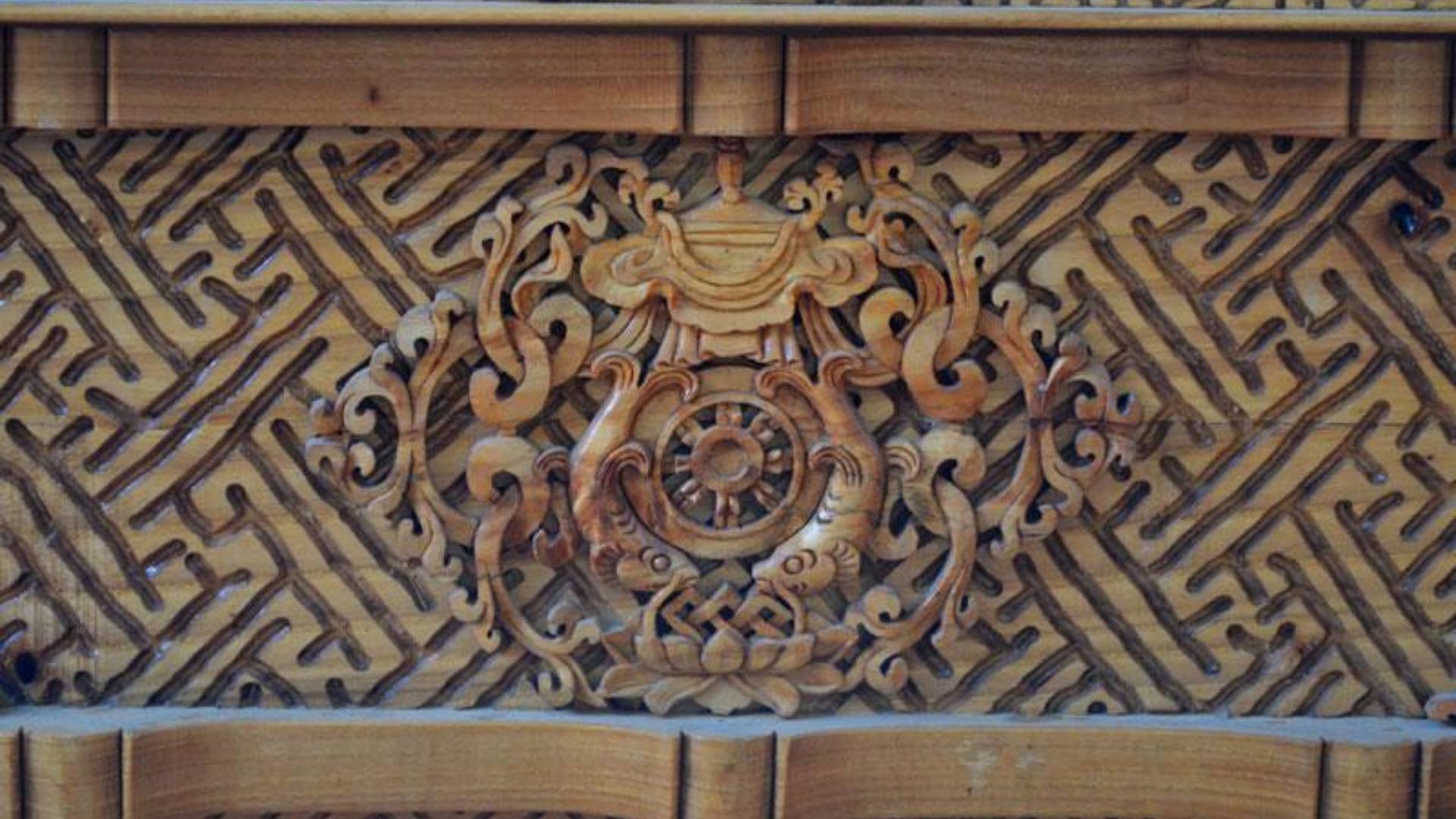
Wood carving is an important element of Ladakh’s traditional architectural and decorative heritage. Its presence can be seen in older houses, monasteries and religious structures across the region.
Artisans work on wooden doors, window frames, pillars and furniture, incorporating intricate patterns into their designs. Geometric forms and floral motifs are particularly common, alongside decorative elements influenced by Buddhist artistic traditions.
The craft requires an understanding of timber and traditional carving techniques, with much of the knowledge transmitted through practical experience.
Known as Ladakh Shingskos, the traditional wood-carving craft has received Geographical Indication recognition, highlighting its distinctive regional identity.
Thangka: Buddhist Painting
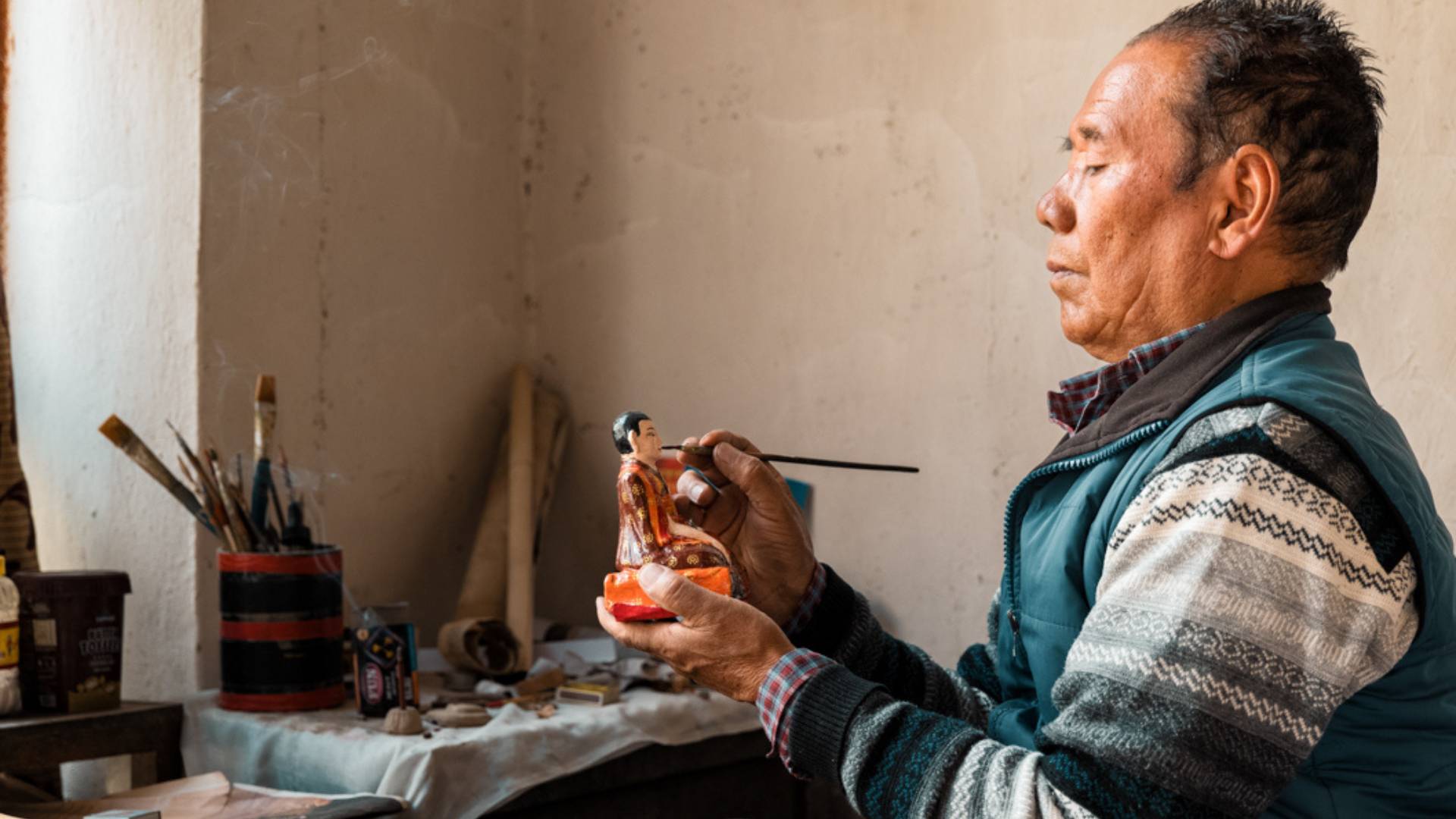
Thangka painting is an important religious art tradition within Ladakh’s Buddhist culture. These paintings are generally created on prepared cloth and depict Buddhist deities, mandalas, religious teachers and episodes from Buddhist teachings.
The process requires considerable precision. Traditional Thangka artists follow established principles of Buddhist iconography, particularly when determining the proportions and positioning of figures. The selection of colours and composition also follows established artistic conventions.
Thangkas are displayed in monasteries and private homes, where they serve as objects of religious devotion and aids to meditation. They are also used during Buddhist ceremonies and for teaching religious narratives.
Beyond their artistic value, these paintings preserve an important visual tradition associated with Buddhist philosophy and religious practice in the Himalayan region.
Chilling: Traditional Metalwork
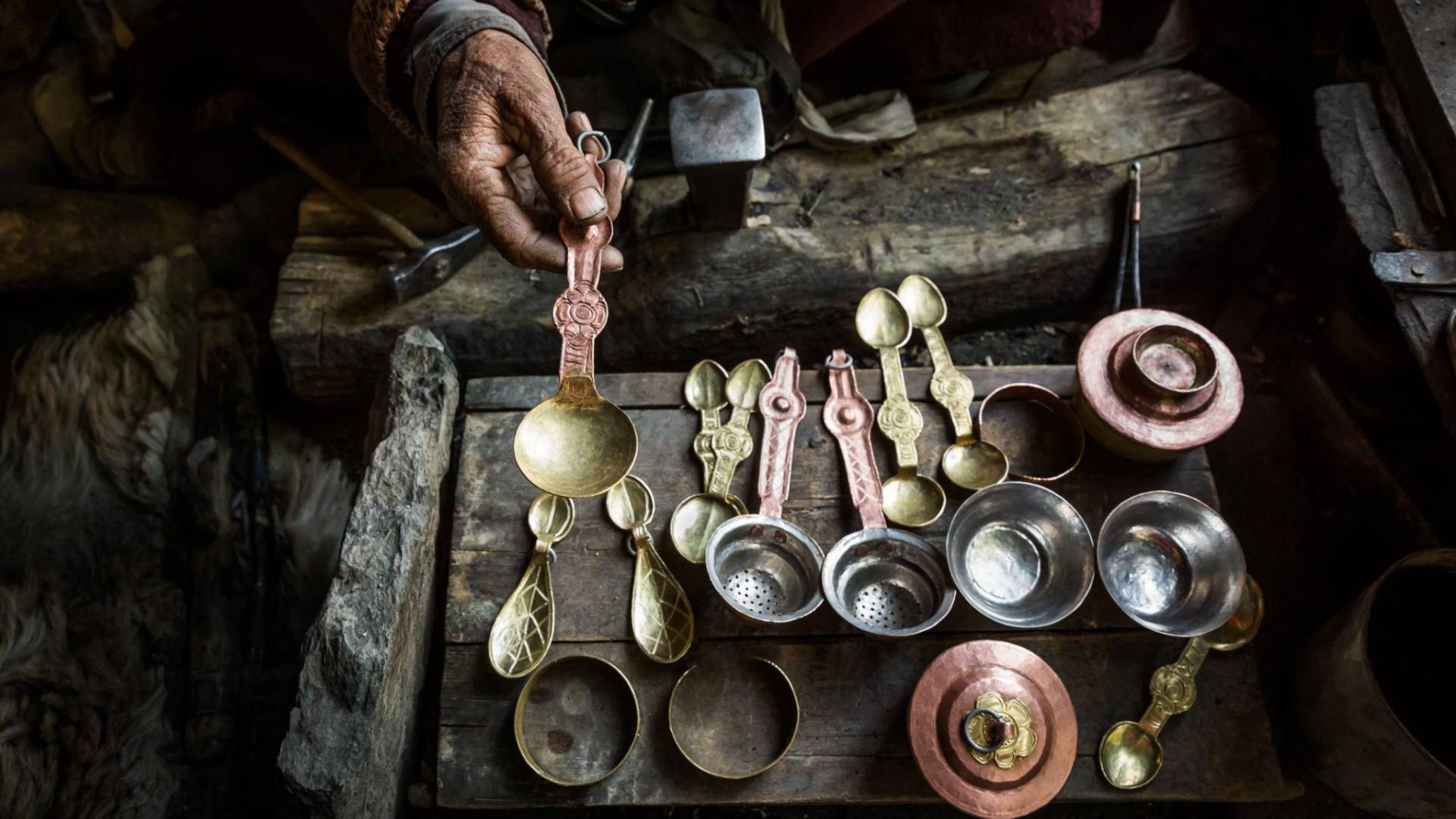
Chilling, a village in the lower Zanskar region, is associated with Ladakh’s traditional metalworking heritage.
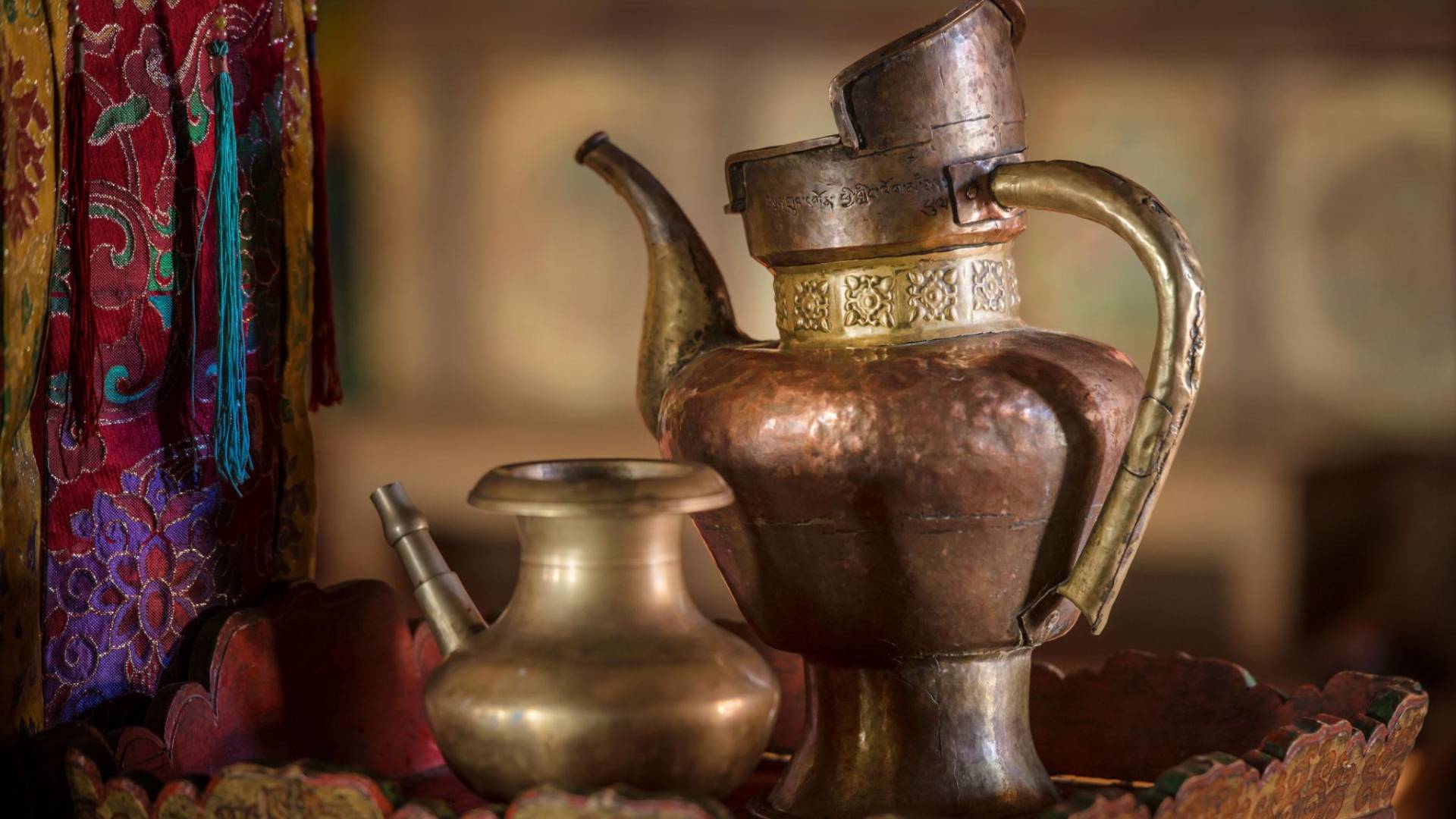
Local craftsmen have practised metalworking for generations, producing household objects alongside decorative and religious items. The process involves heating and shaping metal by hand, followed by finishing techniques that give each object its intended form.
The craft requires considerable practical knowledge, particularly in working with metal and controlling the shaping process.
Chilling Metalwork has received Geographical Indication recognition, bringing attention to the village’s distinctive craftsmanship and its contribution to Ladakh’s artisanal heritage.
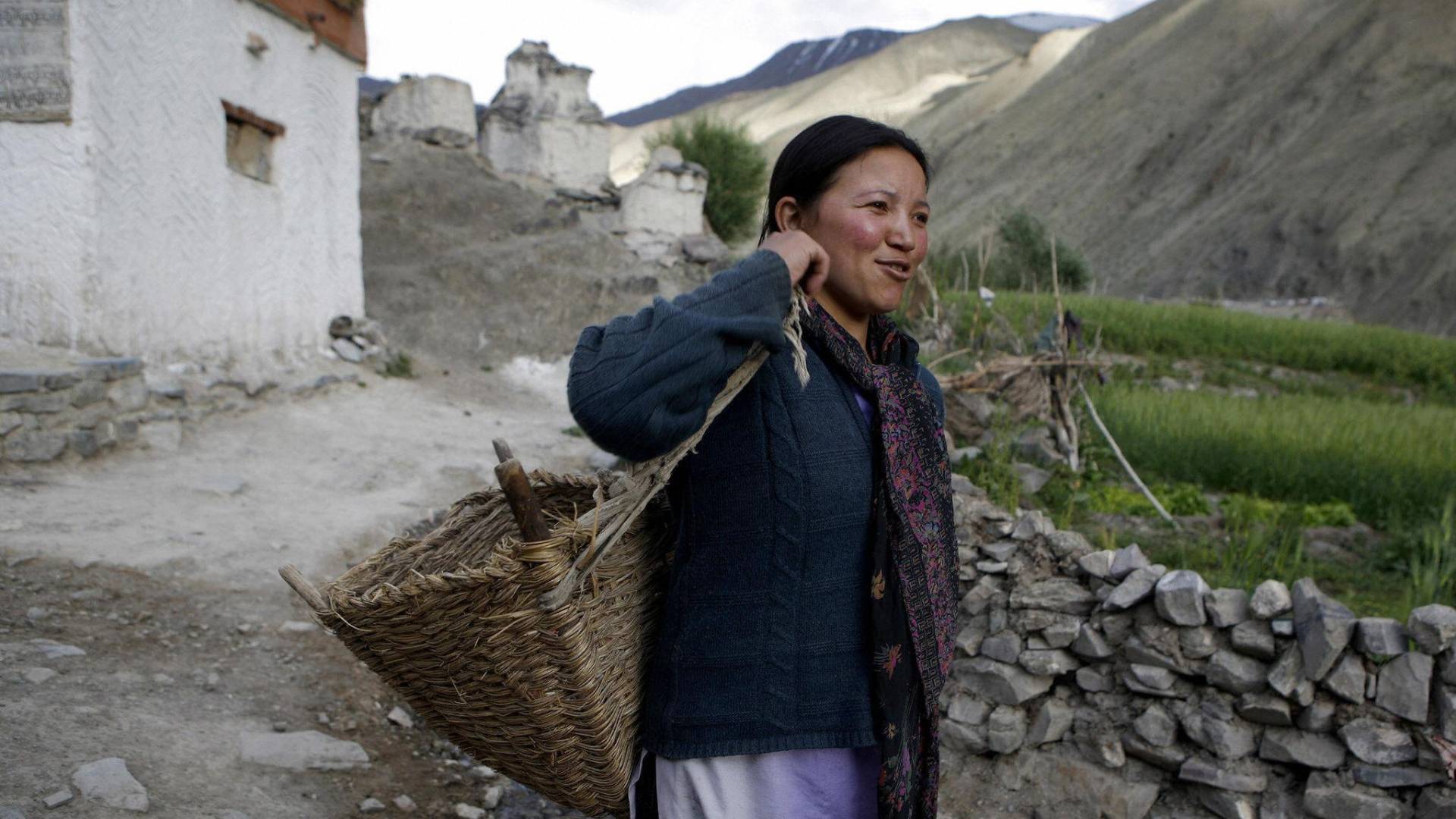
Basketry in Nubra Valley
Basket making is a traditional household craft practised in parts of Nubra Valley. Artisans use locally available natural materials to weave baskets and other functional objects.
The process involves preparing the materials before carefully interlacing them to create baskets of different shapes and sizes. Traditionally, these were used for carrying and storing household or agricultural produce.
Like many crafts in Ladakh, basket weaving developed around the practical needs of village life. The knowledge of selecting suitable materials and working them into useful objects is often passed on through observation and practice within families.
Preserving this skill remains important for recognising the craftsmanship of Nubra’s artisans and maintaining the region’s traditional household practices.
Traditional Music and Instruments
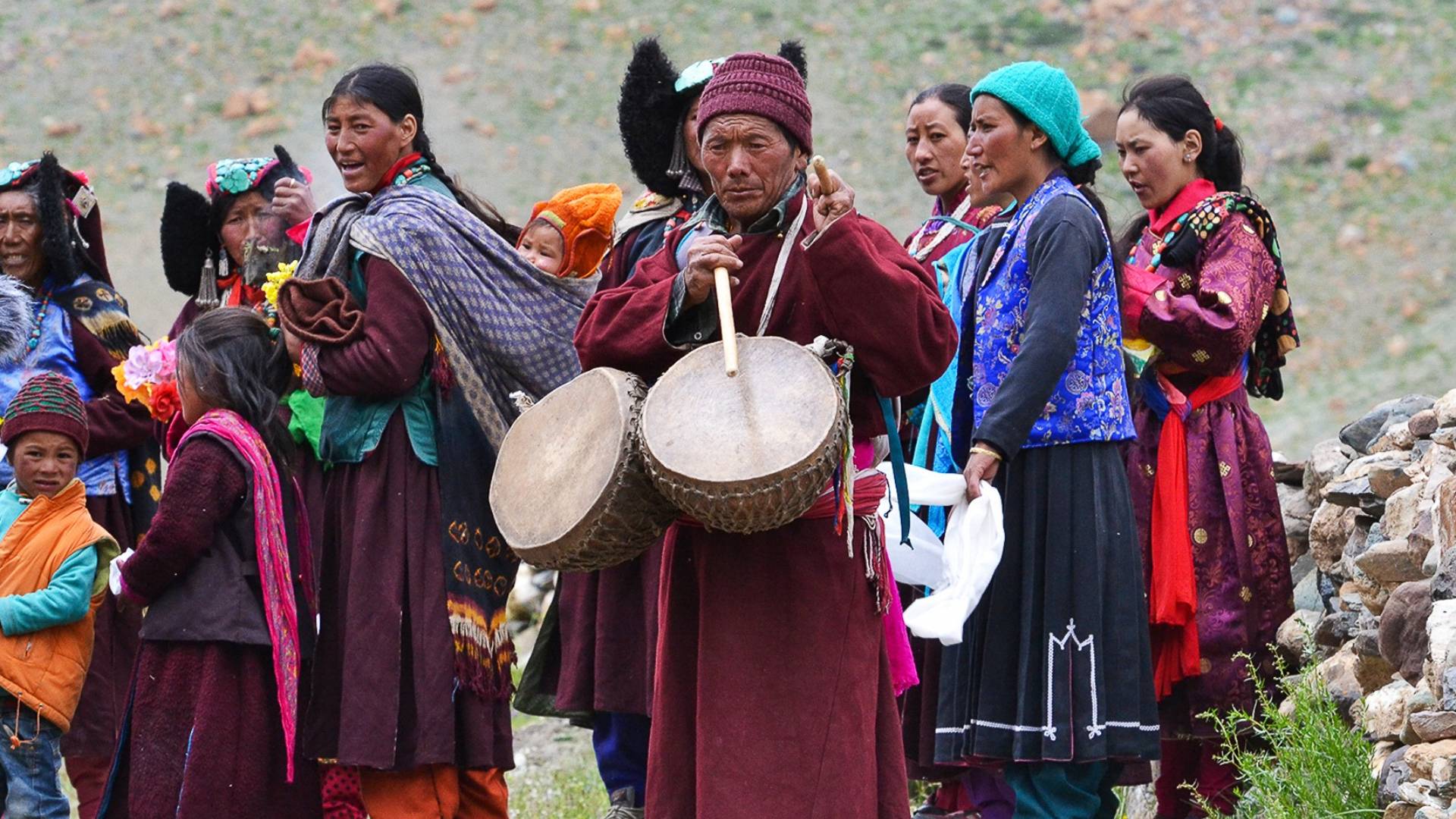
Music occupies an important place in Ladakh’s cultural and religious life. Traditional folk performances are often accompanied by the Daman, a type of drum, and the Surna, a wind instrument similar to a shehnai. Together, they provide the musical accompaniment for weddings, festivals and traditional dances.
Among the Changpa nomadic communities of Changthang, the Piwang, a traditional string instrument, accompanies folk songs and the Jabro dance.
Monastic music follows a different tradition. During Buddhist prayers and Cham, or masked dance festivals, monks use instruments such as the Dungchen, a long trumpet, and the Gyaling, a reed instrument. Drums, cymbals and the Dung (conch shell) also accompany religious chants and ceremonies.
These instruments remain an important part of Ladakh’s living cultural heritage, connecting its folk traditions with religious practices.
Preserving Traditional Crafts
Traditional crafts remain an important part of Ladakh’s cultural identity and provide livelihoods for artisan families. However, changing lifestyles and the growing availability of mass-produced goods have affected demand for several handmade products. Fewer young people are also taking up some traditional occupations, raising concerns about the continuity of these skills.
Government initiatives have an important role in supporting the sector through craft training and opportunities for artisans to showcase their work. The Handicrafts Department in Leh recognises activities such as wood carving, carpet weaving, garment making, embroidery, Thangka painting, pottery and stone carving among the region’s traditional crafts.
In June 2026, the UT Ladakh Administration announced GI recognition for eight traditional products: Ladakh Challi Textiles, Ladakh Thigma, Ladakh Painting, Pabu of Ladakh, Ladakh Nambu Textile, Ladakh Pashmina Textile, Ladakh Chilling Metal Work and Ladakh Likir Pottery.
Such recognition helps establish the regional identity of these products and can create greater visibility for the artisans associated with their production.
Experiencing Ladakh's Crafts
One of the most meaningful ways to understand Ladakh’s cultural heritage is to spend time with the artisans who continue to practise these traditional skills.
Through village visits and cultural experiences offered by Mountain Homestays Ladakh, travellers can engage with local craftsmanship beyond conventional sightseeing. In Phyang, for instance, guests can participate in a wool-felting session with a local host and learn how raw wool is transformed into handmade objects.
A visit to Likir also offers an opportunity to meet local pottery families and understand the techniques behind their craft. Such interactions provide a closer perspective on the time and skill involved in producing handmade objects.
These experiences offer more than an opportunity to purchase a souvenir. They allow travellers to appreciate the knowledge behind traditional craftsmanship and the people who continue to preserve it.
A Living Craft Heritage
Ladakh’s traditional arts and crafts are not simply remnants of an earlier era. They remain closely connected to the region’s cultural identity and the livelihoods of its artisans.
Each textile, pottery vessel and carved object carries knowledge developed through generations of practice. Supporting local artisans and engaging with their work can help maintain the relevance of these traditions as Ladakh continues to change.
For travellers, exploring these crafts offers a different way of experiencing the region, one that goes beyond its landscapes and monuments to understand the people and skills that shape its cultural life.
Experience Ladakh through its artisans and the traditional crafts that continue to define its heritage.