
A visit to a Buddhist monastery in Ladakh can raise questions about the figures painted on its walls. Alongside images of the Buddha in meditation, visitors may encounter deities with fierce expressions and crowns made from skulls. Some carry weapons, while others appear surrounded by flames. The walls also feature sacred symbols whose meanings come from centuries of Buddhist teaching.
These images belong to Tibetan Buddhism, where religious art helps express ideas that can be difficult to explain through words alone. Certain deities represent enlightened wisdom. Others are revered as protectors of Buddhist teachings. Understanding their appearance requires looking beyond the imagery to the beliefs that shape it.
In Ladakh, these traditions remain part of religious life. Monastery paintings preserve sacred narratives, while festivals provide opportunities to witness established rituals. Exploring Tibetan Buddhism in Ladakh offers a closer understanding of the ideas behind its distinctive religious art.
Understanding Tibetan Buddhism
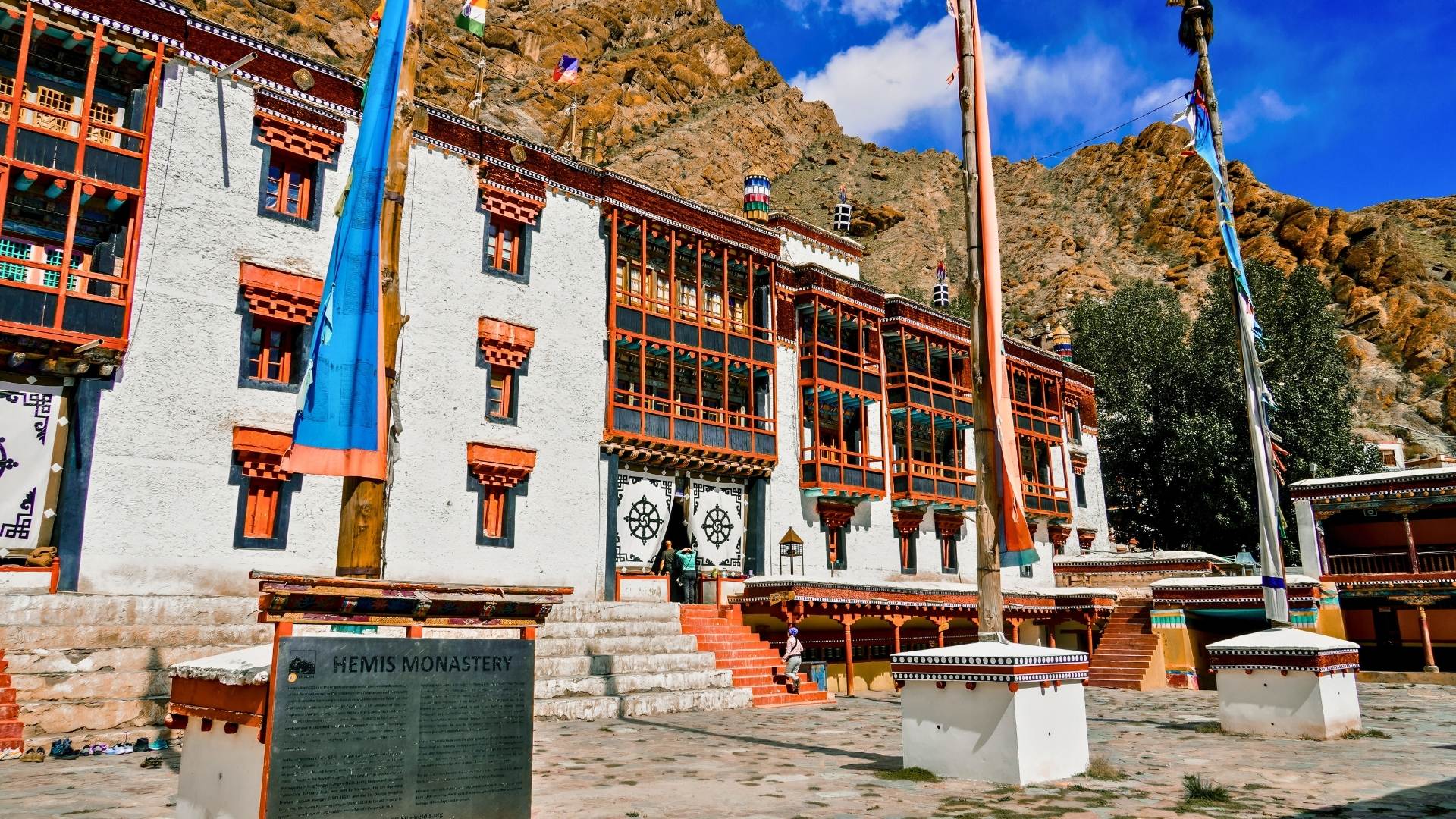
Tibetan Buddhism is rooted in Mahayana philosophy and includes Vajrayana, also known as Tantric Buddhism. Like other Buddhist traditions, it addresses suffering and the path towards liberation. Its practices include meditation, with particular tantric methods followed under the guidance of qualified teachers.
Practitioners may use mantras or visualise deities as part of specific meditation practices. The methods differ between lineages and follow established religious instructions.
Theravada Buddhism, practised widely in Sri Lanka and Southeast Asia, follows different approaches to Buddhist practice. Tibetan Buddhism places particular emphasis on the Bodhisattva ideal, which centres on attaining enlightenment for the benefit of all sentient beings. Vajrayana builds on this Mahayana foundation through specialised tantric methods.
The major schools of Tibetan Buddhism include Nyingma, Kagyu, Sakya and Gelug. Ladakh has a distinctive monastic history, with the Drukpa Kagyu lineage particularly associated with Hemis Monastery. Each lineage preserves its own teachings and practices within the wider Buddhist tradition.
The Meaning of Wrathful Deities
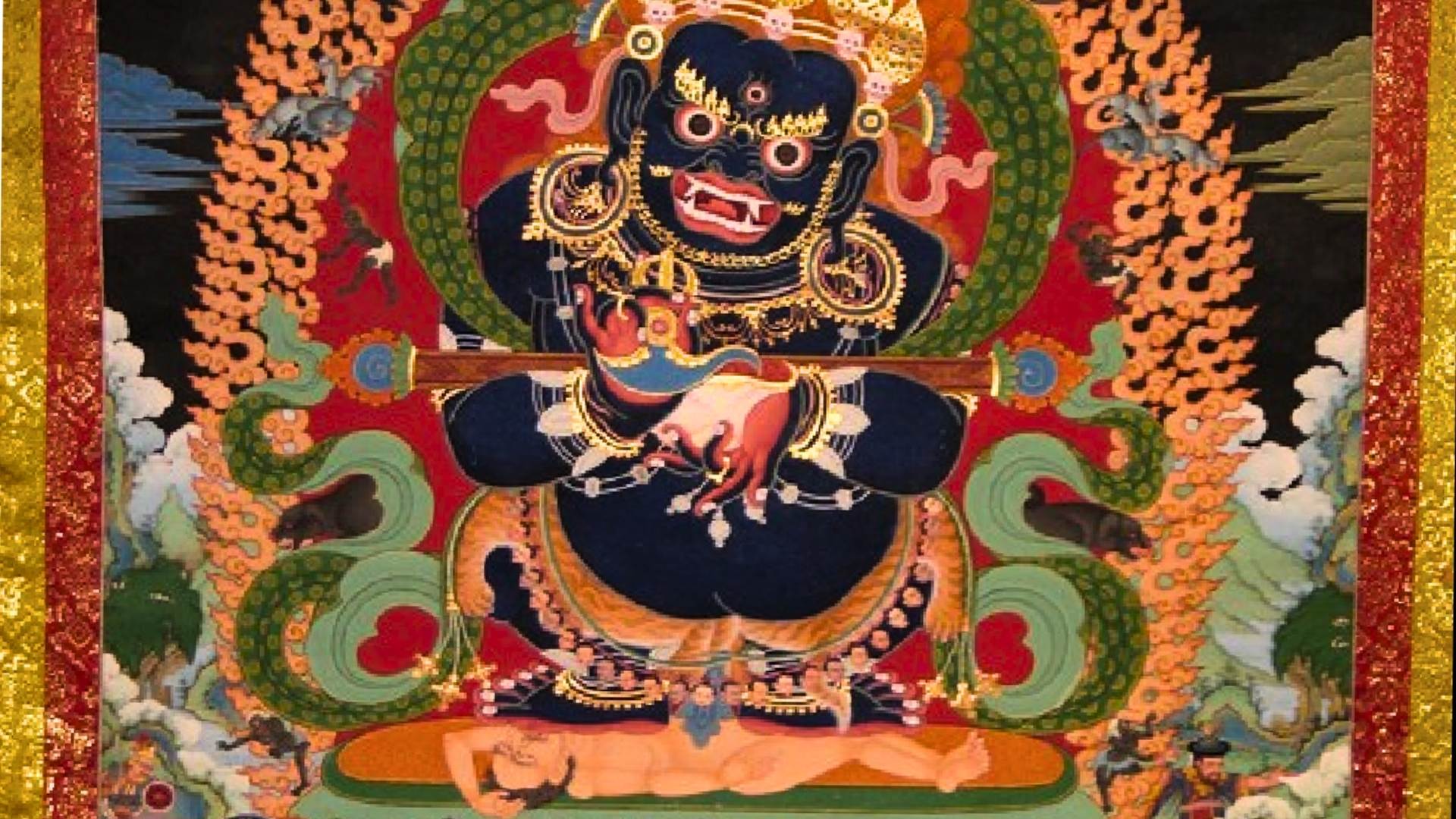
Some of the most striking figures in Tibetan Buddhist art are wrathful deities. Their fierce expressions can seem intimidating to visitors unfamiliar with the tradition. Certain figures have several heads and arms, while others wear skull crowns or hold weapons. Within Tibetan Buddhism, a wrathful appearance does not necessarily represent evil. It can symbolise the force required to overcome ignorance and obstacles to spiritual practice.
Mahakala is revered as a Dharma protector who safeguards Buddhist teachings. Yamantaka, also known in a particular form as Vajrabhairava, is a wrathful tantric deity associated with overcoming death and the forces that sustain suffering. Vajrakilaya, particularly important in Nyingma traditions, is associated with removing obstacles to spiritual practice.
These deities have different roles within their respective religious traditions. Some are central to tantric meditation, while others are invoked as protectors of the Dharma. Their meanings depend on the teachings associated with each figure. Understanding this distinction helps explain why fierce imagery occupies an important place in Tibetan Buddhist art. A deity’s appearance alone does not determine its religious status or meaning.
Spirits and Himalayan Beliefs

Tibetan Buddhist cosmology includes beings beyond the human world. Traditional accounts refer to nāgas, asuras and yakshas. Local traditions also describe spirits associated with particular landscapes. Nāgas are often represented as serpent-like beings connected with water or underground realms. Asuras are commonly associated with rivalry and conflict. In some Himalayan traditions, mountain deities are believed to protect particular places.
Tibetan Buddhist narratives describe encounters between Buddhist masters and powerful spirits. In certain accounts, these beings are subdued and brought under the protection of the Dharma. Such stories reflect the interaction between Buddhist teachings and local religious beliefs as Buddhist institutions developed across the Himalayan region. Not every spirit is considered a demon and not every wrathful deity is believed to have originated as a spirit. These categories have different meanings within Buddhist traditions.
For practitioners who accept traditional Buddhist cosmology, such beings may form part of a wider spiritual reality. From a historical perspective, these narratives also offer insight into the development of religion across the Himalayas.
In Ladakh, stories associated with monasteries help preserve these beliefs. They provide context for understanding how Buddhist teachings became rooted in the region.
Hemis and Its Sacred Dances
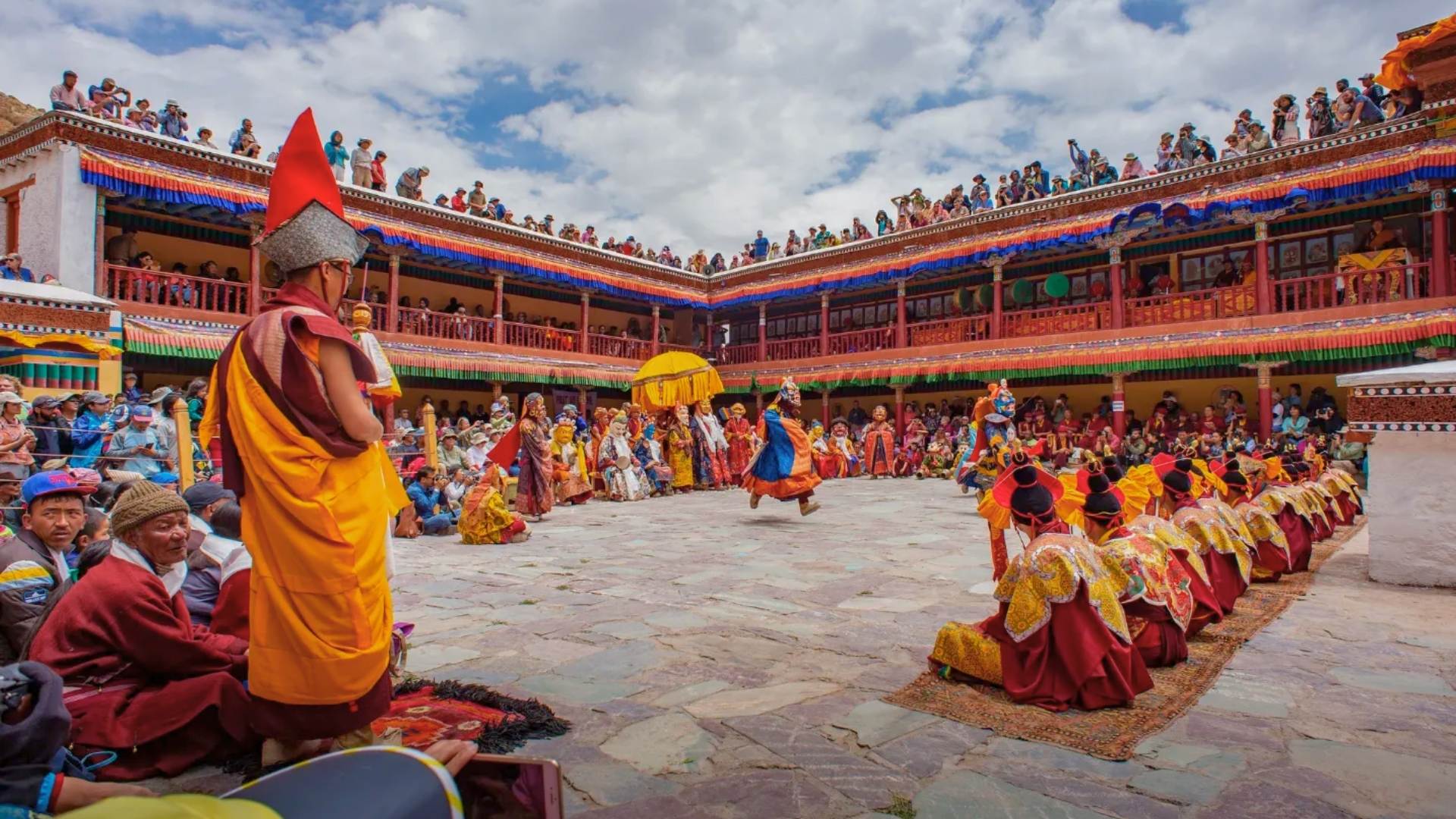
Hemis Monastery is one of Ladakh’s major centres of Tibetan Buddhist practice. It follows the Drukpa Kagyu lineage and is known for its annual Hemis Tsechu festival, which honours Guru Padmasambhava. Guru Padmasambhava holds an important place in Tibetan Buddhism, particularly within the Nyingma tradition. He is revered for his role in establishing Buddhism in Tibet and features prominently in religious narratives across the Himalayan region.
The Hemis festival features Cham, a form of sacred masked dance performed by monks in elaborate costumes. The dances draw on Buddhist narratives and portray figures associated with the protection of the Dharma. Their movements and masks have specific ritual meanings.
These performances are not simply cultural entertainment. They form part of religious practice and preserve stories through ceremonial movement. For visitors interested in Buddhist culture in Ladakh, Hemis offers an opportunity to observe these traditions within an active monastery. The festival demonstrates how religious teachings continue to be expressed through ritual performance.
Protector Deities at Spituk and Phyang
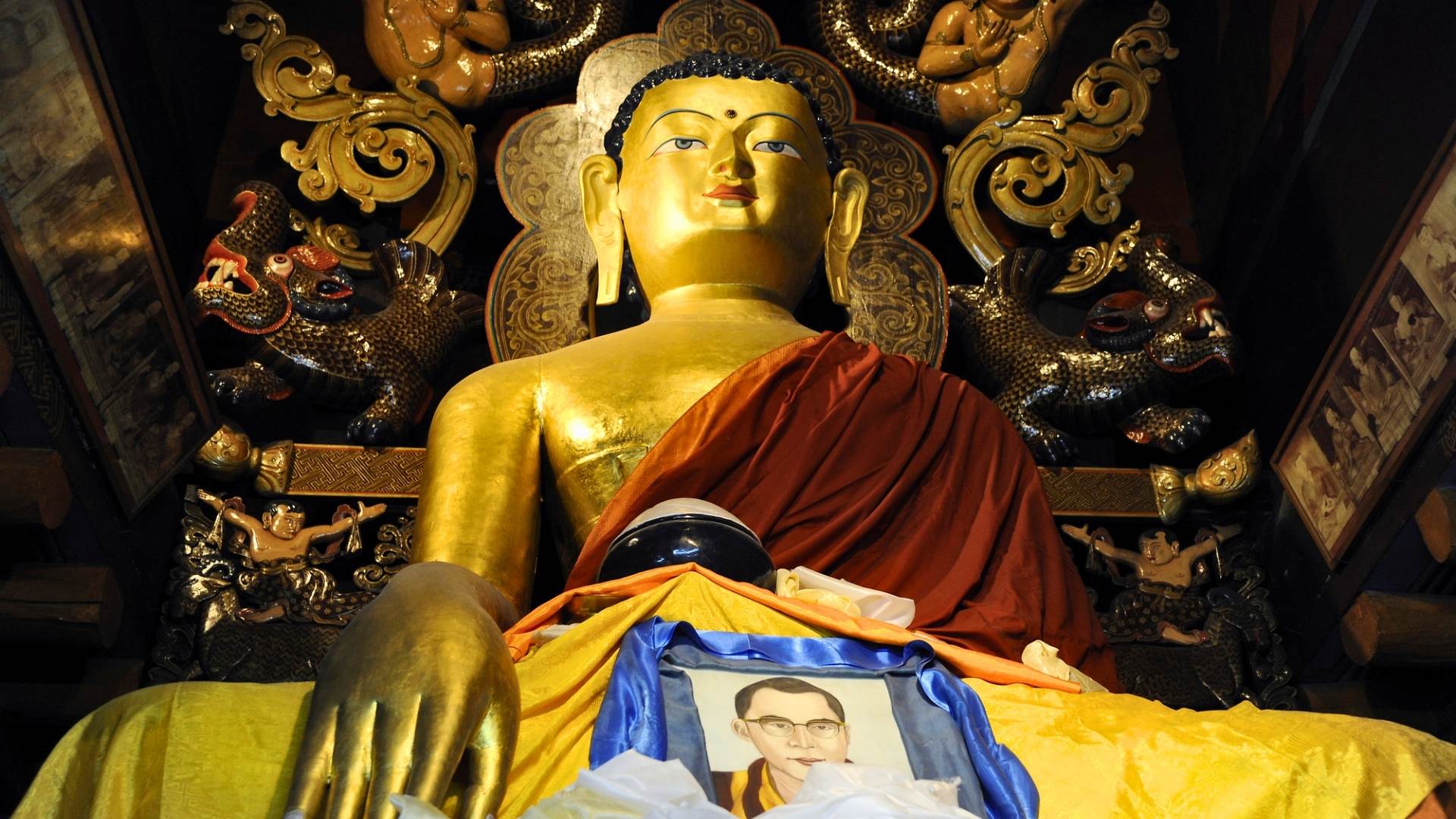
Spituk Monastery is associated with Vajrabhairava, a prominent wrathful deity in Tibetan Buddhist tantric traditions. The deity’s statue is kept covered and traditionally unveiled during the Spituk Festival. The occasion also features masked dances connected with Buddhist narratives. Phyang Monastery is associated with the Mahakala protector tradition. It is also linked with Achi Chokyi Dolma, a female protector commonly depicted riding a blue horse. Stories about her form part of the monastery’s religious heritage.
Protector figures occupy an important place within Tibetan Buddhist practice. Their significance comes from religious teachings rather than their outward appearance. The traditions associated with them also vary between lineages.
Visiting these monasteries provides an opportunity to understand how religious beliefs continue to shape monastic life in Ladakh. Their rituals are part of an ongoing tradition rather than simply remnants of the past.
The Eight Auspicious Symbols
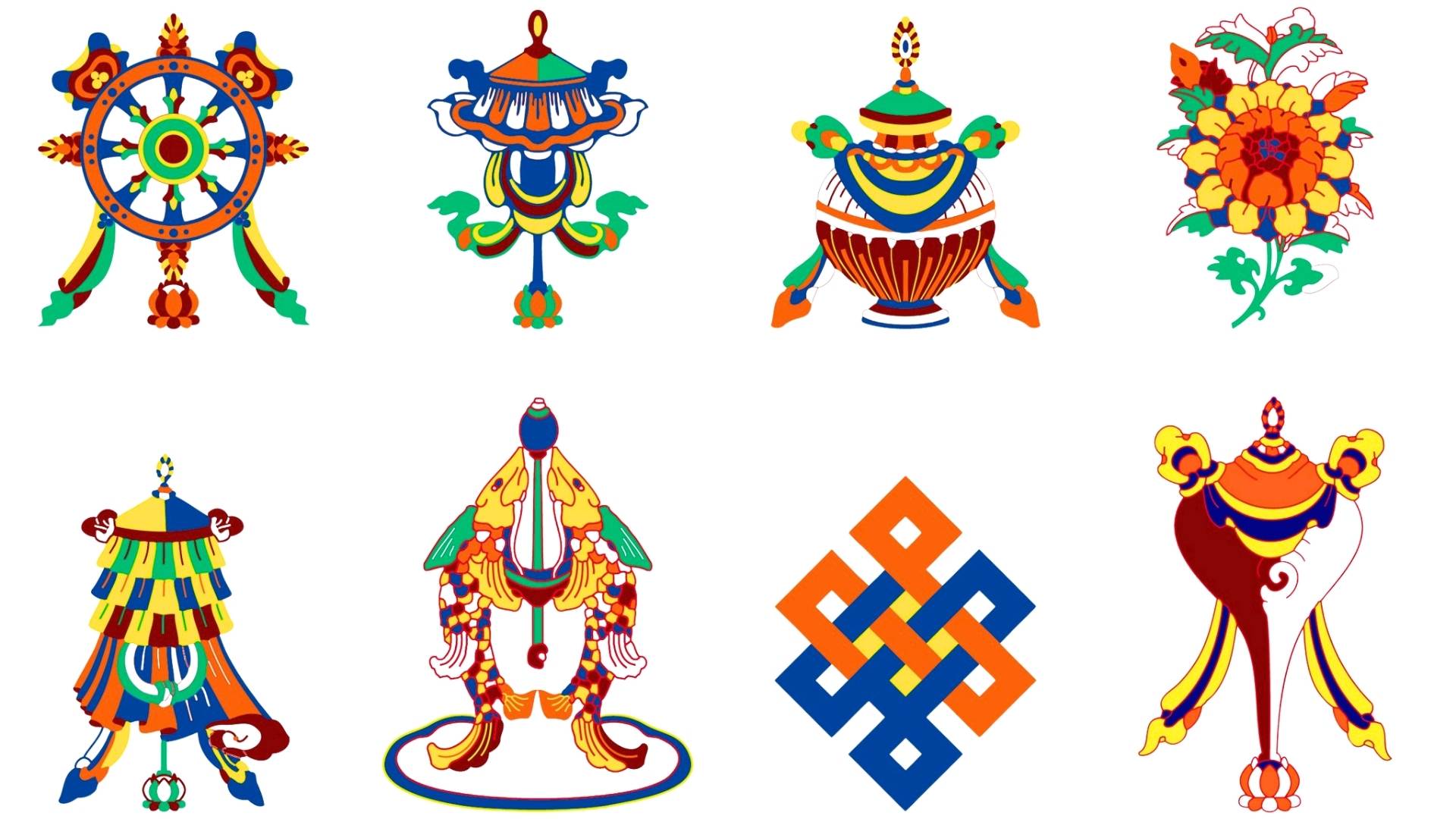
The Eight Auspicious Symbols appear in Tibetan Buddhist religious art. Known as Tashi Tagye in Tibetan and Ashtamangala in Sanskrit, they represent important ideas within Buddhist teachings.
The precious parasol symbolises protection from suffering. Traditionally associated with shelter, it represents the protection offered by the Dharma on the path towards liberation.
The golden fish represent freedom and fearlessness. Their movement through water provides an image of liberation from the constraints of suffering.
The treasure vase symbolises abundance. Its meaning extends beyond material prosperity to include the spiritual resources that support progress towards enlightenment.
The lotus represents purity and awakening. It grows in muddy water yet rises above the surface to flower. This provides a powerful image of spiritual development despite difficult conditions.
The white conch symbolises the spread of the Buddha’s teachings. Its sound represents the proclamation of the Dharma and its ability to reach beings in different directions.
The endless knot represents interdependence. Its interwoven pattern reflects the Buddhist understanding that phenomena arise through causes and conditions rather than existing entirely on their own.
The victory banner represents the overcoming of ignorance. Its symbolism concerns victory over destructive mental patterns rather than triumph over an external enemy.
The Dharma Wheel represents the Buddha’s teachings. Its eight spokes are associated with the Noble Eightfold Path, which guides practitioners towards right understanding and conduct. The path also emphasises mental discipline and wisdom.
Together, these symbols communicate central ideas in Buddhist thought. Their meanings connect religious art with the pursuit of spiritual understanding and liberation.
Alchi and Its Buddhist Art
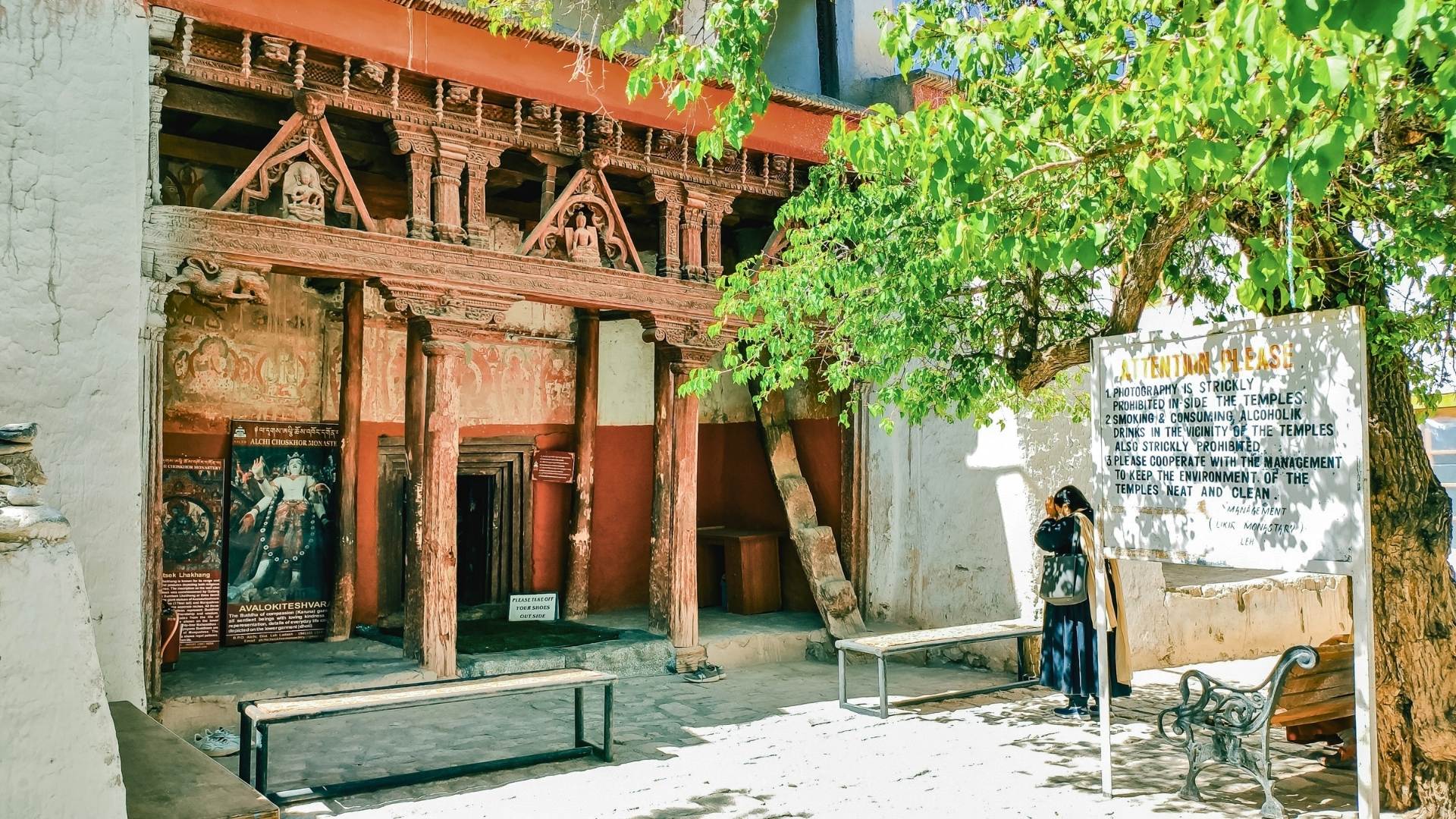
Alchi Monastery is an important site for studying historical Buddhist art in Ladakh. Its murals are known for their artistic detail and the influence of Kashmiri artistic traditions. They also reflect the cultural exchanges that shaped Buddhist art across the Himalayas. Mandalas hold an important place in certain Vajrayana practices. Their carefully arranged designs may represent a deity’s sacred palace and serve as aids to meditation or ritual visualisation. The figures and geometric patterns follow established religious conventions.
Alchi’s historic artwork provides insight into how Buddhist teachings were represented through painting. Its murals preserve details of artistic traditions that developed centuries ago, making the monastery significant for understanding the history of Buddhism in the region. The site is especially valuable for studying the relationship between religious ideas and artistic expression. Its paintings reveal how Buddhist imagery developed through cultural exchange rather than in isolation.
For visitors exploring Ladakh’s monasteries, Alchi offers a historical perspective on the region’s Buddhist heritage. Its artwork invites closer attention to the religious narratives and artistic methods preserved within the complex.
Symbols Used in Buddhist Practice
Dakinis are important figures in Vajrayana Buddhism and are associated with wisdom and enlightened activity. Their appearance varies across traditions, and they may be depicted in peaceful or wrathful forms.
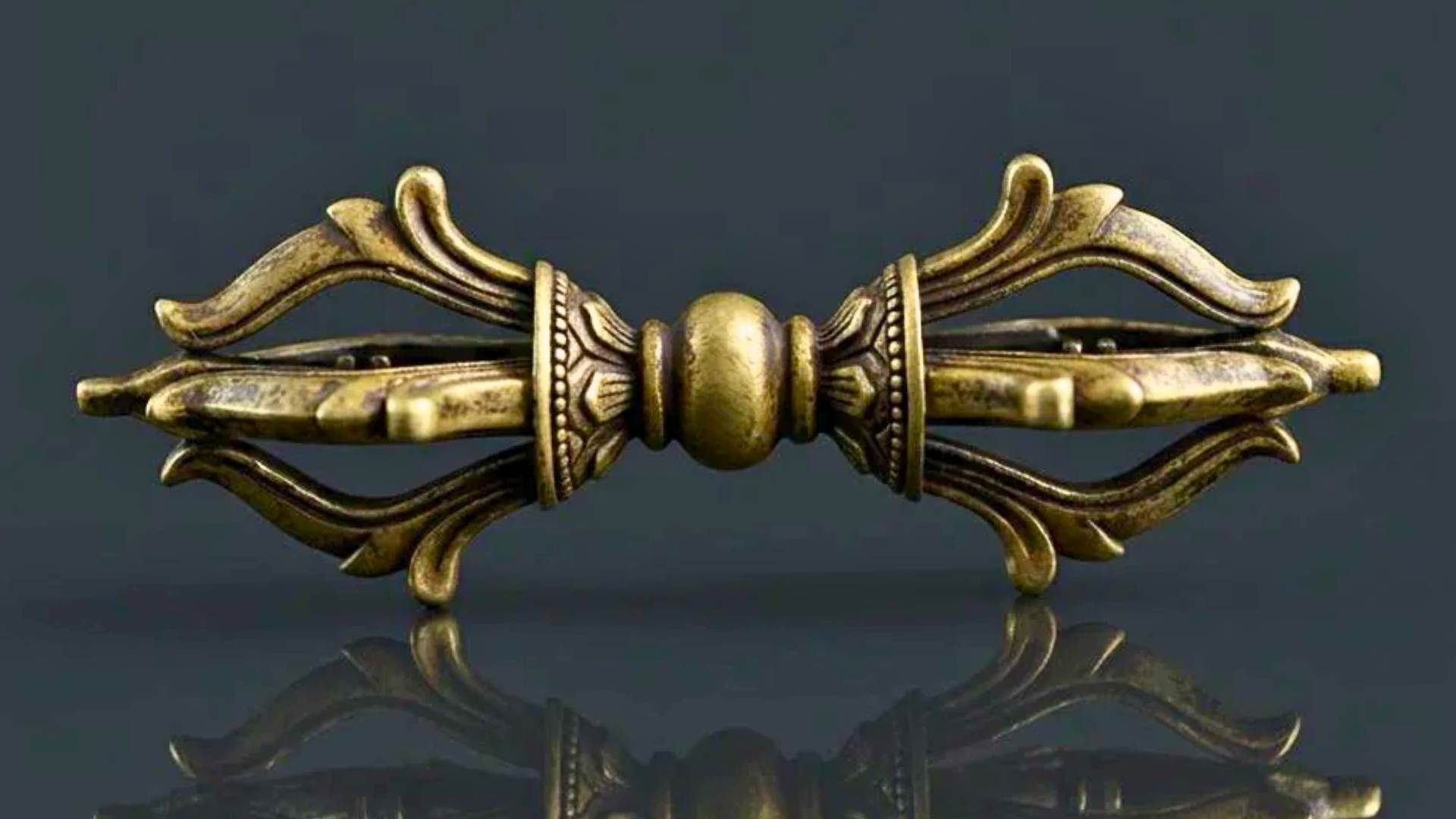
The vajra, known in Tibetan as dorje, is another important ritual object. It is commonly associated with skilful means. The ritual bell, or drilbu, is associated with wisdom. They are often used together in Vajrayana ceremonies to express the relationship between these aspects of Buddhist practice. Mantras also hold an important place in tantric traditions. Their recitation follows specific instructions and may form part of meditation or ritual practice. Visualisation is used in certain systems to support concentration and the development of spiritual understanding.
These practices belong to structured religious traditions. Their meanings are shaped by the teachings of the relevant lineage and cannot be fully understood from the objects or gestures alone. In Ladakh, such traditions remain visible through monastic rituals and religious objects. They show how Tibetan Buddhism connects philosophical teachings with established forms of practice.
Tibetan Buddhism in Ladakh Today
Tibetan Buddhism continues to shape Ladakh’s religious heritage. Its sacred images express ideas about wisdom and the overcoming of ignorance, while protector deities hold specific roles within different lineages. The Eight Auspicious Symbols offer another way to understand Buddhist thought. Each carries a distinct meaning, from protection against suffering to the teachings that guide practitioners towards liberation.
Ladakh’s monasteries preserve these traditions through religious practice and historic artwork. Hemis provides insight into sacred masked dances, Spituk maintains its protector tradition, and Phyang preserves stories associated with its religious figures. Alchi offers a valuable record of Buddhist artistic history.
Exploring these monasteries helps explain Tibetan Buddhism beyond the appearance of its deities and symbols. Their religious traditions provide a deeper understanding of the beliefs that continue to shape Ladakh’s cultural life.