
What if the story of a place could be understood through its ancient stones, sacred forests and the traditions of the people who have lived there for generations?
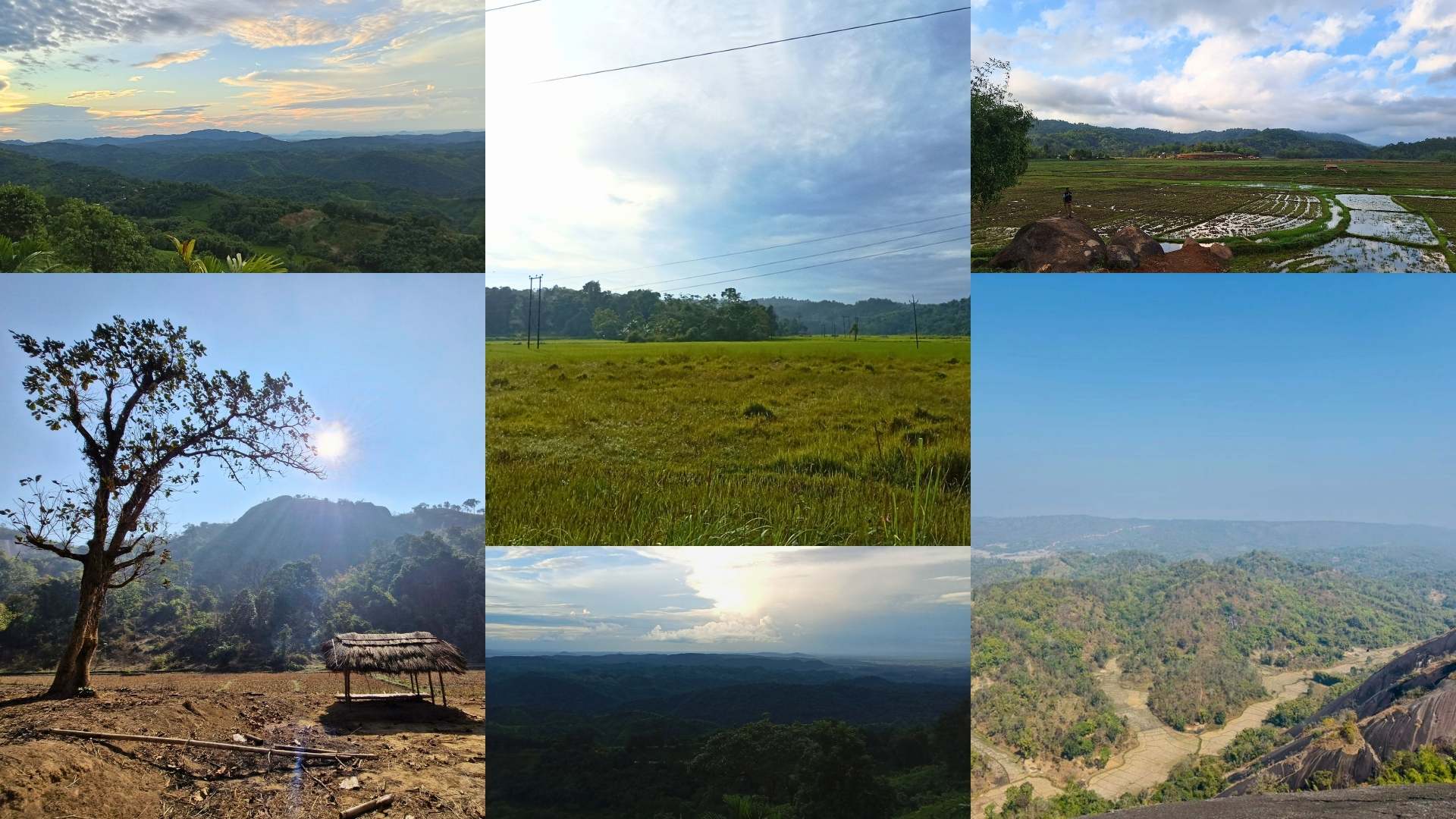
In the hills of West Karbi Anglong, Assam, Umswai Valley offers a glimpse into a cultural landscape shaped by the traditions of the Hill Tiwa community. The valley is home to sacred forests, ancestral monuments, traditional agricultural practices and village institutions that continue to hold significance in community life.
The landscape comprises forested hills, agricultural fields, streams and settlements such as Amsai, Bormarjong and Shikdamakha. Beyond its natural beauty, Umswai holds a remarkable cultural heritage in which religious beliefs, farming practices and community traditions remain closely connected.
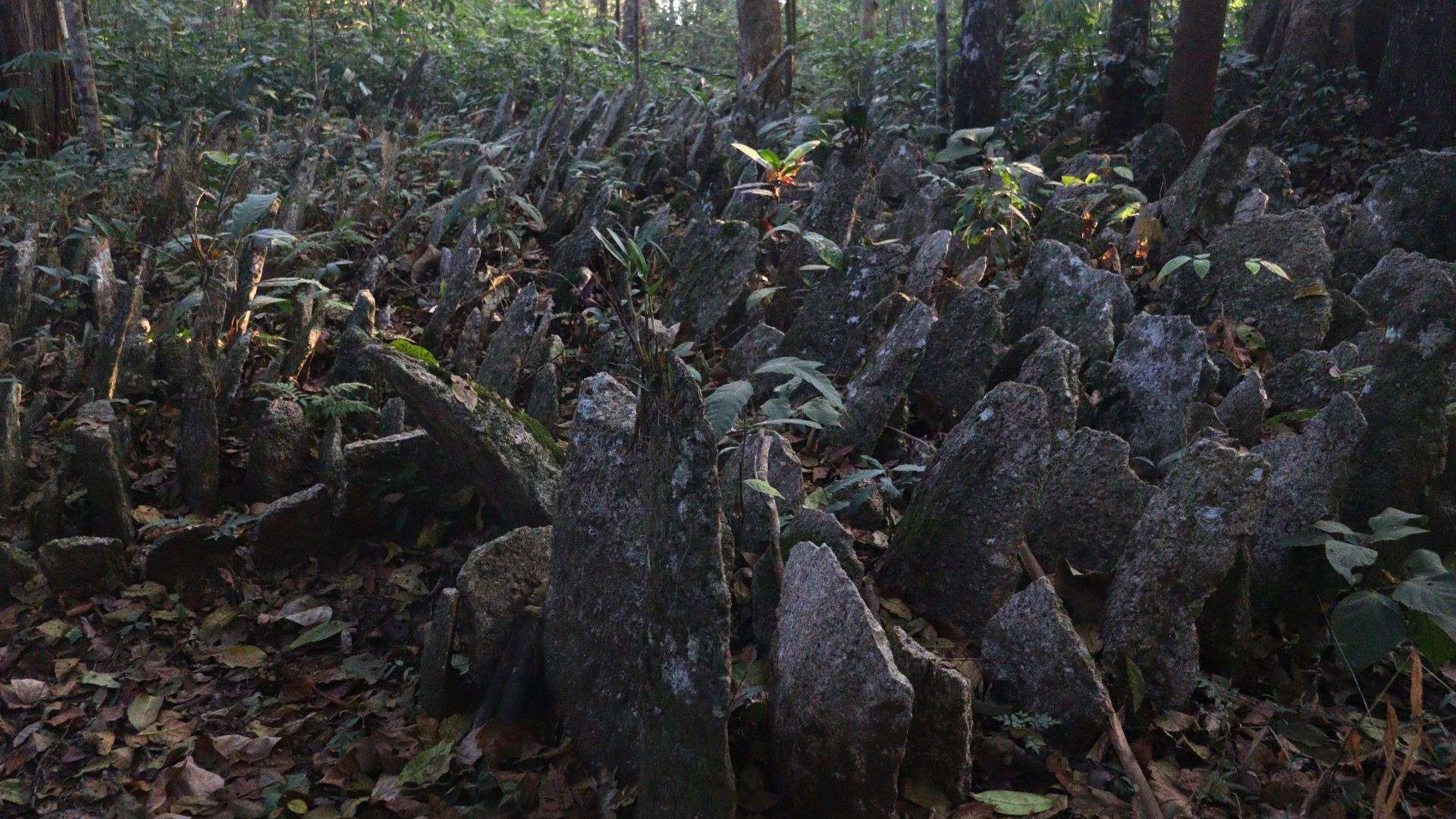
One of its most distinctive features is the living megalithic tradition of Amsai village. A field study documented 2,048 stone monuments arranged in 1,024 pairs, associated with Chongkhong Phuja, a traditional ceremony connected with ancestral worship and the beginning of the agricultural season.
However, the story of Umswai extends far beyond its monoliths. It is equally a story of the Hill Tiwa people, their guardian deities, oral traditions, agricultural knowledge and relationship with the surrounding landscape.
The Hill Tiwa Community:Traditions and Village Life
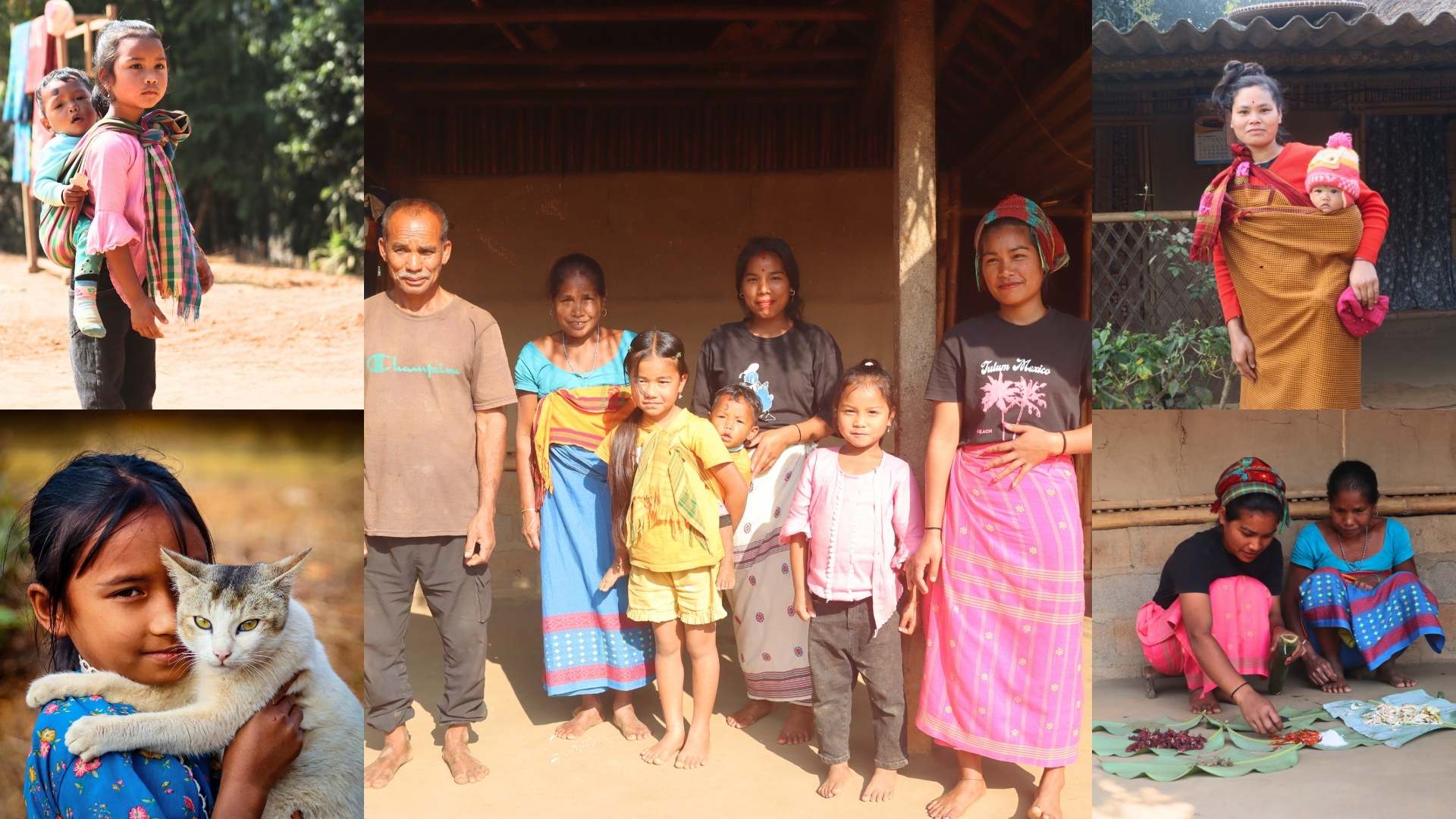
The Hill Tiwas are an indigenous community of Northeast India, historically also known as Lalungs. Their cultural identity is reflected in their traditional village institutions, religious practices, craftsmanship, agriculture and stories passed down through generations.
In Umswai Valley, a village is more than a collection of households. It is a place where responsibilities are shared, ceremonies are organised and knowledge is transferred between generations.
Traditional village institutions have an important role in maintaining this social structure. The Loro, a religious leader, conducts ceremonies and has responsibilities associated with community affairs and dispute resolution. Other traditional functionaries assist with ritual preparations, offerings and the organisation of ceremonial activities.
The council of village elders, known as the Pisai, also plays a significant role during Chongkhong Phuja. Its members carry designated responsibilities, reflecting a system of collective organisation that continues to shape important community events.
Family customs form another part of Hill Tiwa identity. Matrilineal traditions are associated with the community, and local accounts describe matrilocal practices in some households, where a husband moves into his wife’s household after marriage.
These customs, institutions and oral histories provide a deeper understanding of the community and the traditions that have shaped life in Umswai Valley.
Chongkhongsal Sacred Forest and the Monoliths of Umswai
Among the culturally significant places in Umswai Valley is Chongkhongsal Sacred Forest, a landscape associated with guardian deities, ancestral ceremonies and the religious beliefs of the Hill Tiwa community.
The forest is not regarded simply as an area of trees and vegetation. It holds spiritual significance, with particular places connected to local deities and traditional ceremonies. Its importance lies in the relationship between the natural landscape, ancestral beliefs and the community that continues to observe these customs.
Local elders trace the stone monument tradition to a period extending more than 2,500 years into the past. A 2023 archaeological study documented 2,048 menhirs and table stones at the ceremonial site in Amsai village, including stones erected in 2017. The researchers identified 1,024 pairs and suggested that the tradition may have continued for around a thousand years, while noting that further dating is required to establish its precise chronology.
The stones have specific names within the local tradition. Orlong thuna refers to an upright stone, while Phidri tongkhra refers to a flat stone placed in front of it. These monuments are erected at designated locations and form part of the ceremonial landscape.
The sacred forest also has rules governing access and the use of its resources. Visitors are not permitted to remove plants, herbs or other materials from the forest. Such restrictions reflect the religious importance of the site and the responsibilities associated with entering a place considered sacred.
For visitors, Chongkhongsal offers an opportunity to understand how cultural heritage can remain connected to a living landscape. Its significance cannot be understood through the stones alone; it also lies in the ceremonies, beliefs and community traditions associated with them.
Chongkhong Phuja: Where Ancestral Ritual Meets Agriculture

Chongkhong Phuja is one of the most distinctive traditions of the Hill Tiwa community in Umswai Valley. The ceremony connects ancestral worship with the agricultural calendar, marking an important stage in the community’s relationship with the land.
The ritual takes place in two stages: Bor Chongkhong Phuja and Phidri Chongkhong Phuja.
Bor Chongkhong Phuja
Bor Chongkhong Phuja is performed before agricultural activities begin. Through the Pisai, village elders seek permission from Palakhongor, a guardian deity associated with the village, to commence the farming season. According to traditional beliefs documented in the study, cultivating the land before the ceremony could bring misfortune or affect the harvest.
Phidri Chongkhong Phuja
Phidri Chongkhong Phuja generally takes place in late April or early May, approximately three weeks after the first ceremony. It includes ancestral offerings and the erection of stone monuments at Chongkhongsal.
Several traditional functionaries participate in the ceremony. The Loro leads the religious proceedings, while the Hadari and Toloi assist with ritual responsibilities. The Phador and Sangot are associated with collecting and installing the stones, while other members of the traditional system help organise the proceedings. The ceremony marks an important transition in the agricultural calendar. Following the ritual, farming activities, including the sowing of seeds in jhum fields, begin. The connection between ancestral worship and agriculture makes Chongkhong Phuja particularly significant. The stones are not merely remnants of an earlier period; their erection continues to form part of a tradition that links the community’s past with its present way of life.
Balakhangor and the Spiritual Landscape of the Valley

The spiritual geography of Umswai extends beyond forests into mountains, temples, and sacred sites connected to local deities. One of the most important among them is the temple dedicated to Balakhangor, the guardian deity of the village. Inside the temple, a sacred throne-like structure known as “Rongdoh” is believed to house the deity. Ritual offerings of rice, water and harvested paddy are preserved within the temple throughout the year before being ceremonially replaced during harvest festivals.
The connection between spirituality and landscape becomes even more visible at Balakhangor Rock Mountain, a sacred trekking site located above the valley. Reaching the summit requires a forest trek of nearly three hours, but the journey itself forms part of the experience. At the top, the open rock surface overlooks valleys, forests and scattered villages across the hills of West Karbi Anglong.
Unlike adventure tourism destinations built around infrastructure and commercialization, trekking in Umswai remains closely connected to silence, storytelling and the cultural significance of the land itself. The mountain is not only scenic; it is spiritually meaningful for the community that lives around it.
Daily Life, Food Culture and Traditional Livelihoods
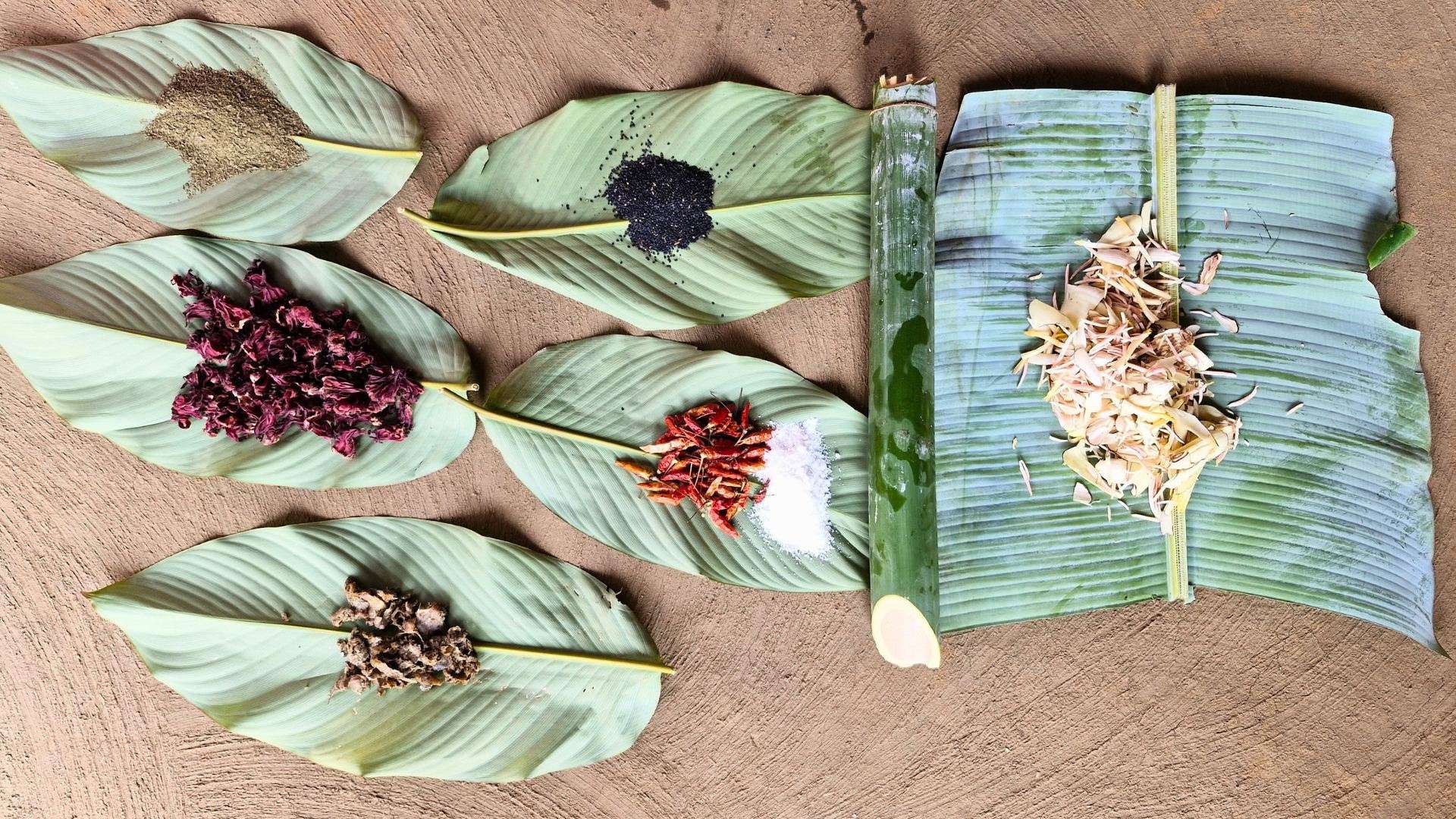
Life in Umswai Valley continues to revolve around agriculture, forest resources, and local craftsmanship. Rice, ginger, potatoes, vegetables and broom grass are widely cultivated across the valley, while bamboo handicrafts and handloom weaving continue as important parts of household livelihoods. Some families also produce smoked green tea and practice silkworm rearing.
Food culture in Umswai reflects simplicity and local adaptation. Rice and millet form the center of most meals, accompanied by seasonal vegetables, dry fish and meat. One of the distinct culinary traditions of the valley is bamboo cooking, where food is slow-cooked inside bamboo tubes over firewood, creating a smoky flavor closely associated with the region. Cooking is often done on traditional firewood stoves, reinforcing how everyday practices remain connected to inherited traditions.
For travelers, these experiences create opportunities for deeper cultural interaction rather than surface-level tourism. Visitors can participate in farming, traditional cooking, weaving demonstrations, tea experiences, folklore sessions, rice beer tasting and local music gatherings.
Why Umswai Valley Has Strong
Potential for Sustainable Tourism
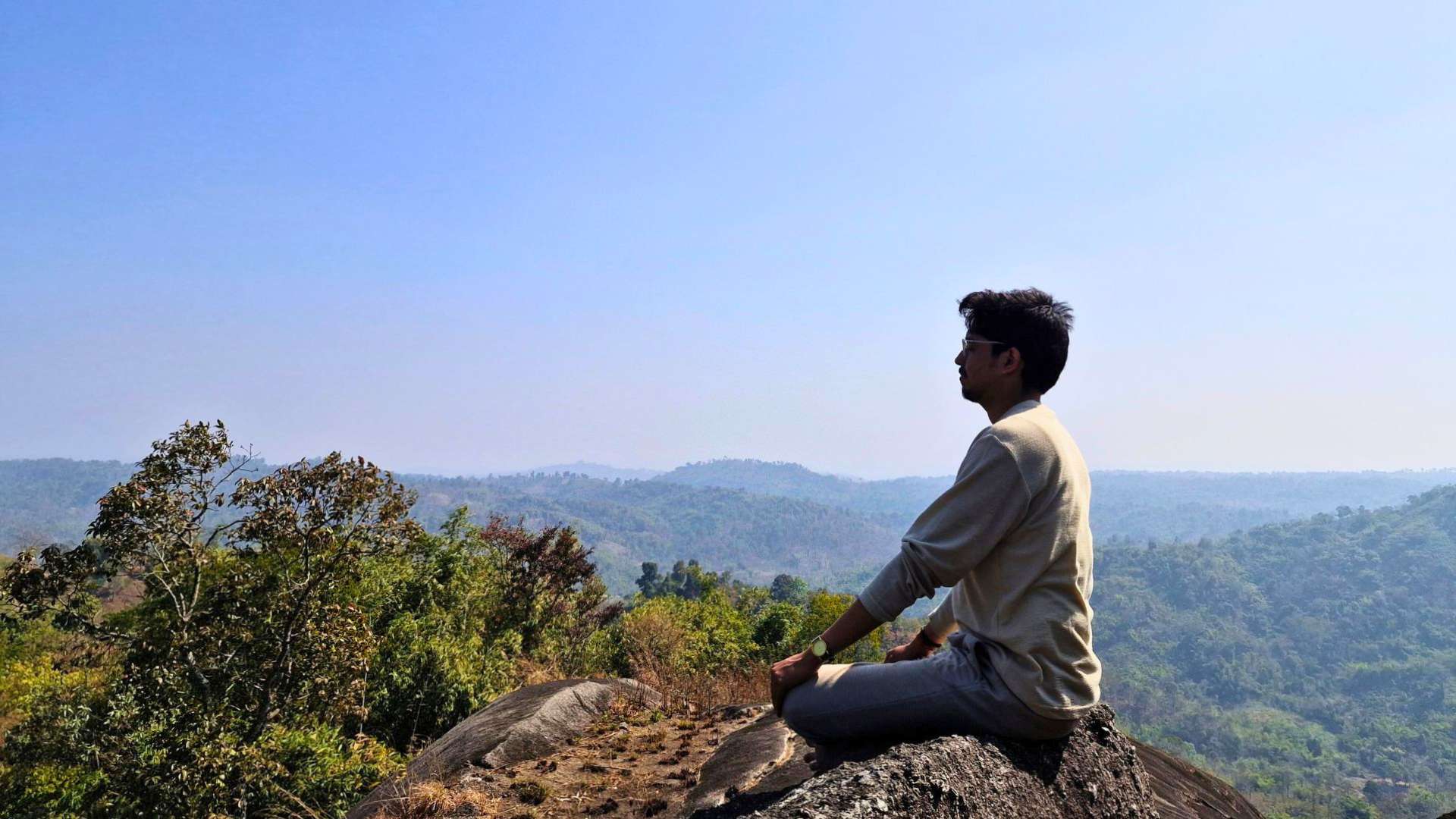
As travelers increasingly seek meaningful and community-led experiences, Umswai Valley has strong potential as a sustainable tourism destination in Assam. The valley brings together sacred forests, indigenous Tiwa culture, trekking routes, oral storytelling traditions and immersive village experiences within one landscape.
Unlike many growing destinations, Umswai still remains deeply community-centered and free from large-scale commercialization. This creates opportunities for responsible tourism that supports local livelihoods while preserving cultural traditions and ecological balance.
The future of tourism in Umswai will depend on maintaining this balance carefully through community participation, cultural preservation and sustainable homestay development. If developed responsibly, Umswai Valley could emerge as one of Assam’s most important examples of indigenous community tourism.

For travelers looking to experience Umswai Valley closely, staying within the village becomes an important part of the journey. Pumah Eco Homestay, located in Amsai Pinung village of Umswai, offers visitors an opportunity to experience the Hill Tiwa way of life through local food, storytelling, sacred forest walks and everyday village experiences.
More than just a stay, the homestay allows travelers to connect with the culture and traditions that make Umswai Valley one of Assam’s most unique emerging destinations.
Umswai Valley Assam offers a rare opportunity to experience indigenous culture, sacred landscapes and community-led tourism while supporting the preservation of Tiwa heritage.
Connect with the Tiwa community through a stay at Pumah Eco Homestay.