
Stargazing in Ladakh Beyond Hanle
Experience the Night Sky at Pangong Lake & Near Leh
Planning a stargazing trip to Leh Ladakh? While Hanle is India’s most famous dark sky destination, it isn’t the only place where you can witness the Milky Way. Explore community-led astronomy experiences at Pangong Lake and Phyang Village, where modern astronomy meets Ladakh’s traditional knowledge, local culture and village life.
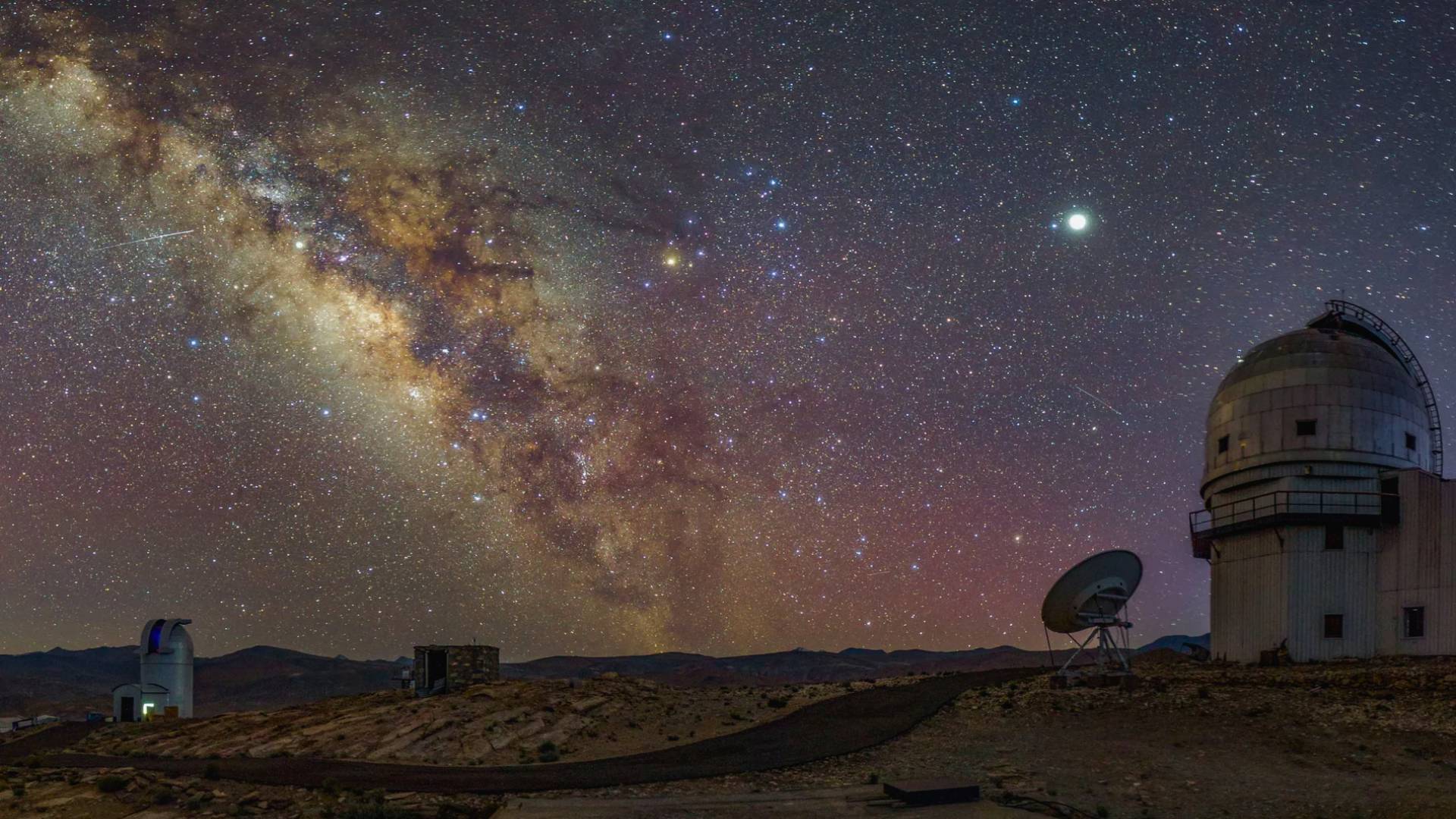
When people think about stargazing in Ladakh, Hanle is usually the first destination that comes to mind. Home to India’s Dark Sky Reserve and one of the highest astronomical observatories in the world, Hanle has become synonymous with astronomy tourism in Leh Ladakh.
But Ladakh’s clear skies are not limited to Hanle.
Across the region, the same high altitude, dry climate and minimal light pollution create excellent conditions for observing the night sky. From the shores of Pangong Lake to the quiet village of Phyang near Leh, there are places where travellers can experience the Milky Way, planets and constellations while also discovering something equally fascinating, the way local communities have understood the sky for generations.
Mountain Homestays has developed these experiences with local communities, combining telescope-based astronomy with Ladakh’s cultural traditions. Instead of treating the stars only as astronomical objects, these experiences explore how the night sky has shaped local beliefs, seasonal practices and everyday life in the Himalayas.
Pangong Lake: Stargazing at 14,000 fts.
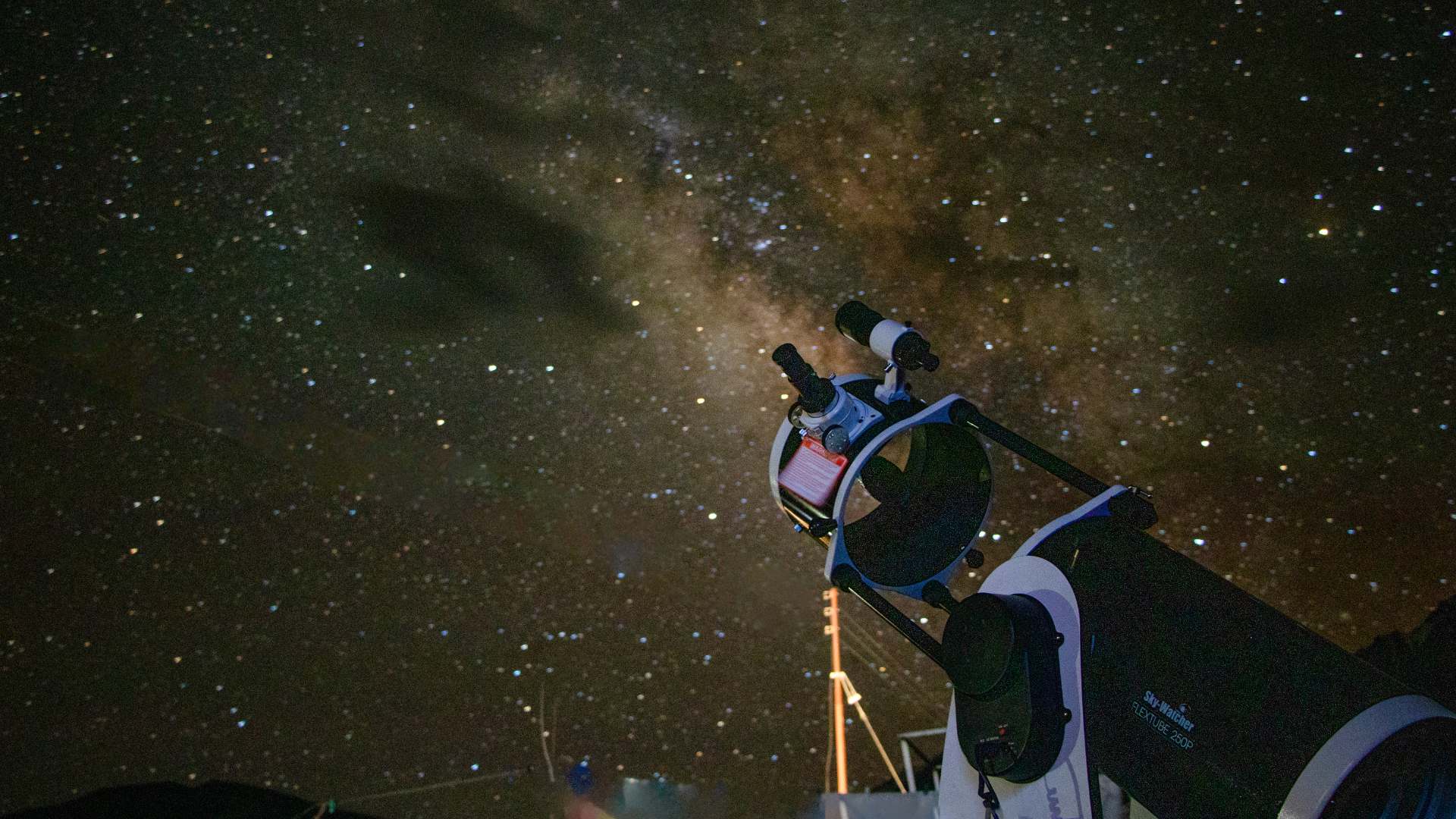
For many tourists, Pangong Lake is a place to admire during the day. Once night falls, however, the landscape changes completely. At nearly 14,000 feet above sea level, the skies above the lake become exceptionally clear, offering ideal conditions for stargazing in Ladakh.
In Maan Village, Mountain Homestays offers two dedicated astro experiences, Astrostays at Pangong Lake and Astro Retreat at Pangong Lake. Located just 50 metres apart, both homestays are run by local Ladakhi families and host guided astronomy sessions using a 10-inch Dobsonian telescope.
Guests observe the Moon, planets, star clusters and on clear nights, the Milky Way stretching across the Himalayan sky. Yet the experience goes beyond what can be seen through the telescope.
Alongside modern astronomy, local Astrospreneurs introduce visitors to Ladakhi stories connected with the night sky. Guests learn how earlier generations interpreted stars and planets, how celestial events were linked with changing seasons and agriculture and how this knowledge became part of everyday life in mountain communities. These oral traditions, passed down through generations, add another dimension to the experience and remind visitors that astronomy has always been part of Ladakh’s cultural heritage.
After the stargazing session, the evening continues inside a traditional Ladakhi home, where guests enjoy local cuisine, interact with their hosts and experience village life around Pangong Lake. Rather than spending only a few hours at the lake, travellers leave with a deeper understanding of both the landscape and the people who live there.
Stay by Pangong Lake with stargazing, local culture and Ladakhi hospitality.

Stargazing Near Leh at Phyang Village
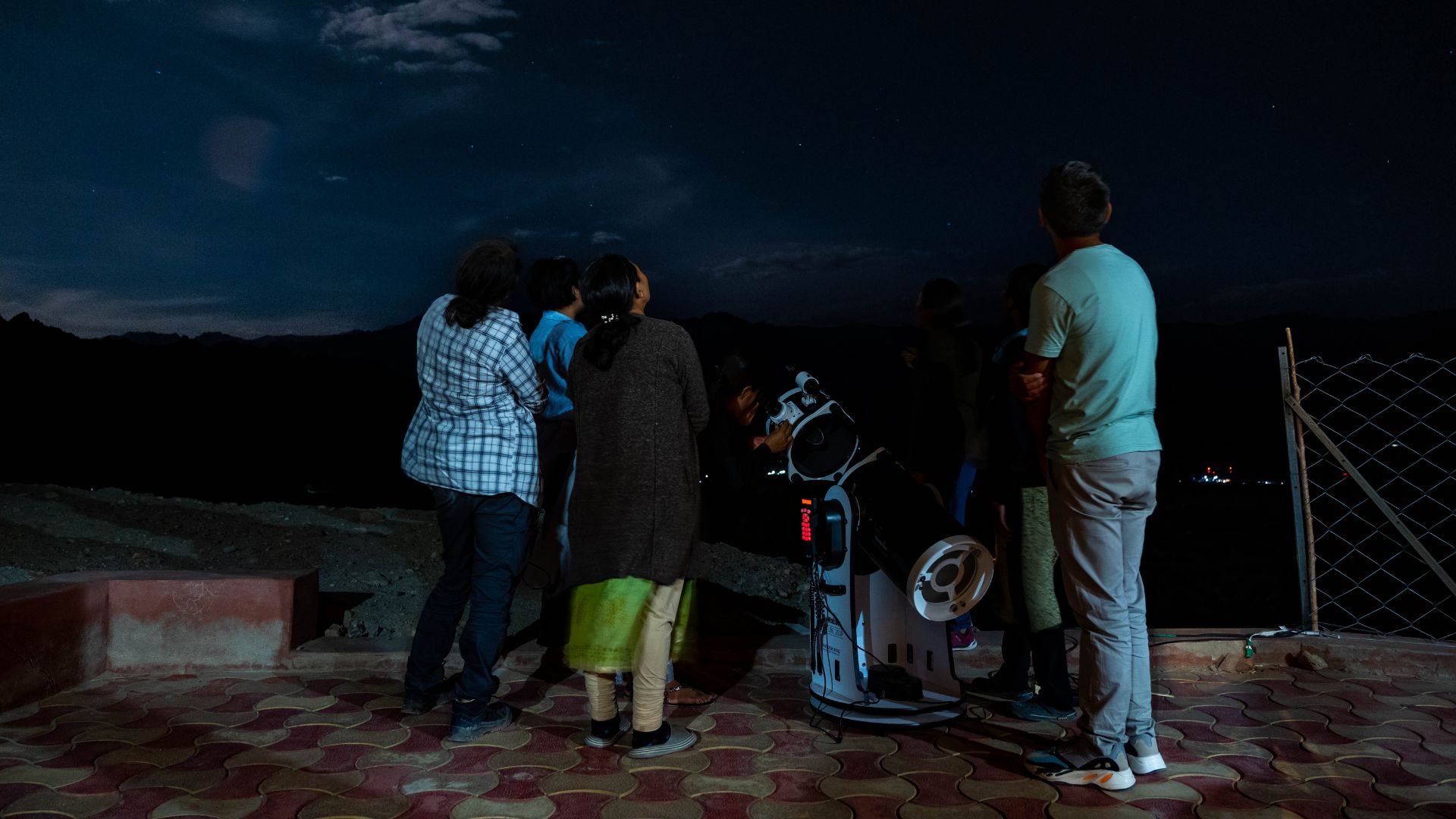
Travellers with limited time often assume they have to travel all the way to Hanle for a meaningful astronomy experience. However, one of Ladakh’s most accessible stargazing destinations is located just outside Leh.
Near the historic Phyang Monastery, Cosmohub brings together astronomy, local culture and education in a community-led experience. Visitors begin by learning about the night sky through interactive exhibits before heading outdoors for telescope observations and guided sky interpretation.
What makes Cosmohub different is its focus on connecting science with local knowledge. Along with identifying planets and constellations, visitors hear stories that have been shared within Ladakhi communities for generations. These include local interpretations of celestial bodies, traditional beliefs associated with the stars and the ways people once understood time, seasons and their environment by observing the sky.
For travellers searching for a stay near Leh, Phyang Eco Homestay and Phyang Eco Residence provide an ideal base. Staying in the village allows guests to experience Ladakhi hospitality, enjoy home-cooked meals and spend more time exploring the community beyond a short evening visit.
Experience stargazing, Ladakhi astronomy, local folklore and village culture near Leh.
More Than an Astronomy Experience
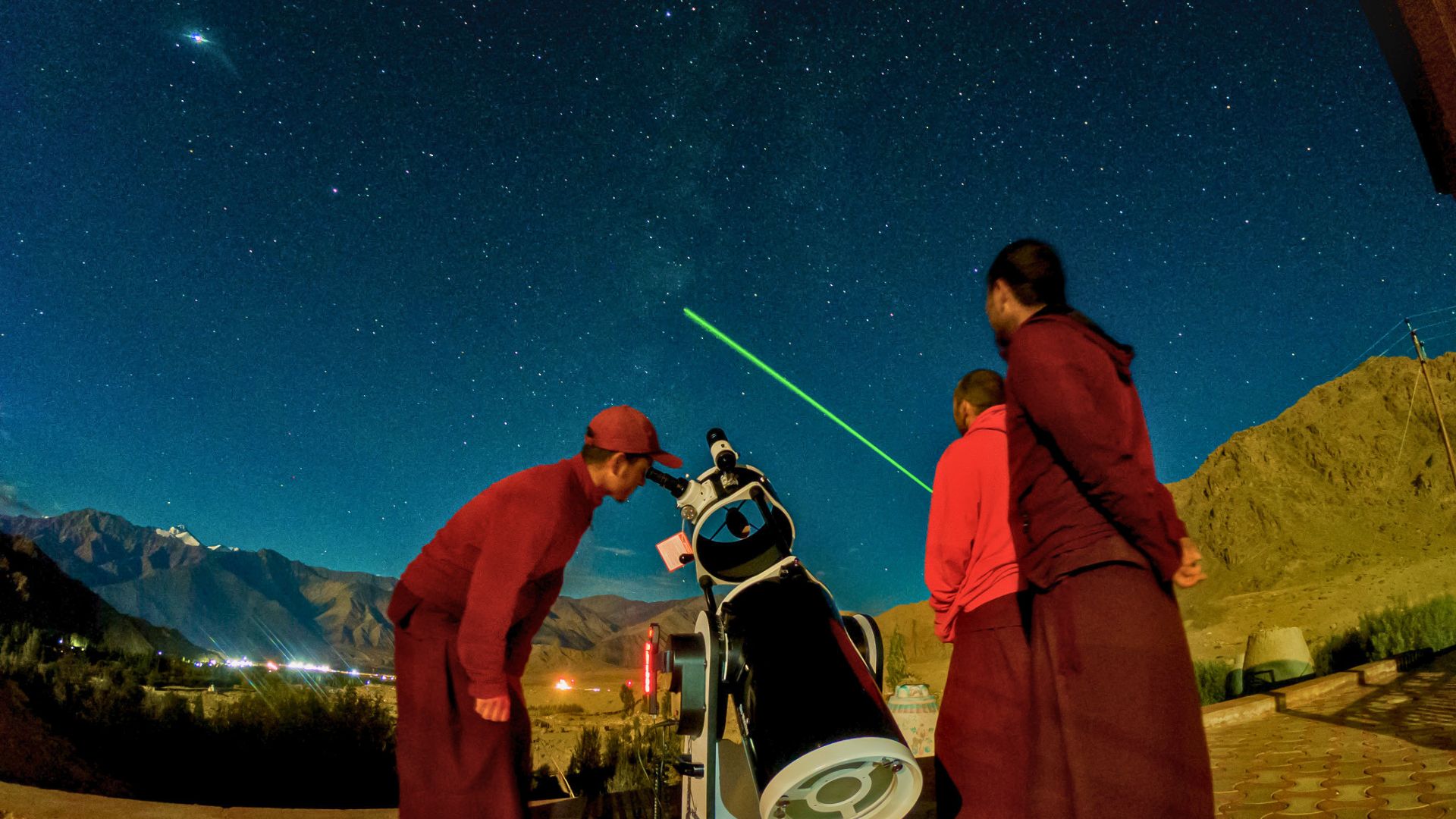
Many places offer telescope sessions. Mountain Homestays offers something different. Here, astronomy becomes a way to understand Ladakh itself.
Every experience is designed around the local communities that host it. Guests stay in family-run homestays, share meals prepared with locally grown ingredients, walk through villages, meet local residents and explore traditions that continue to shape life in these Himalayan communities.
The night sky becomes more than a collection of stars and planets. It becomes a way of understanding how generations of Ladakhis observed nature, celebrated seasons and passed knowledge from one generation to the next.
Experience Ladakh Beyond Hanle
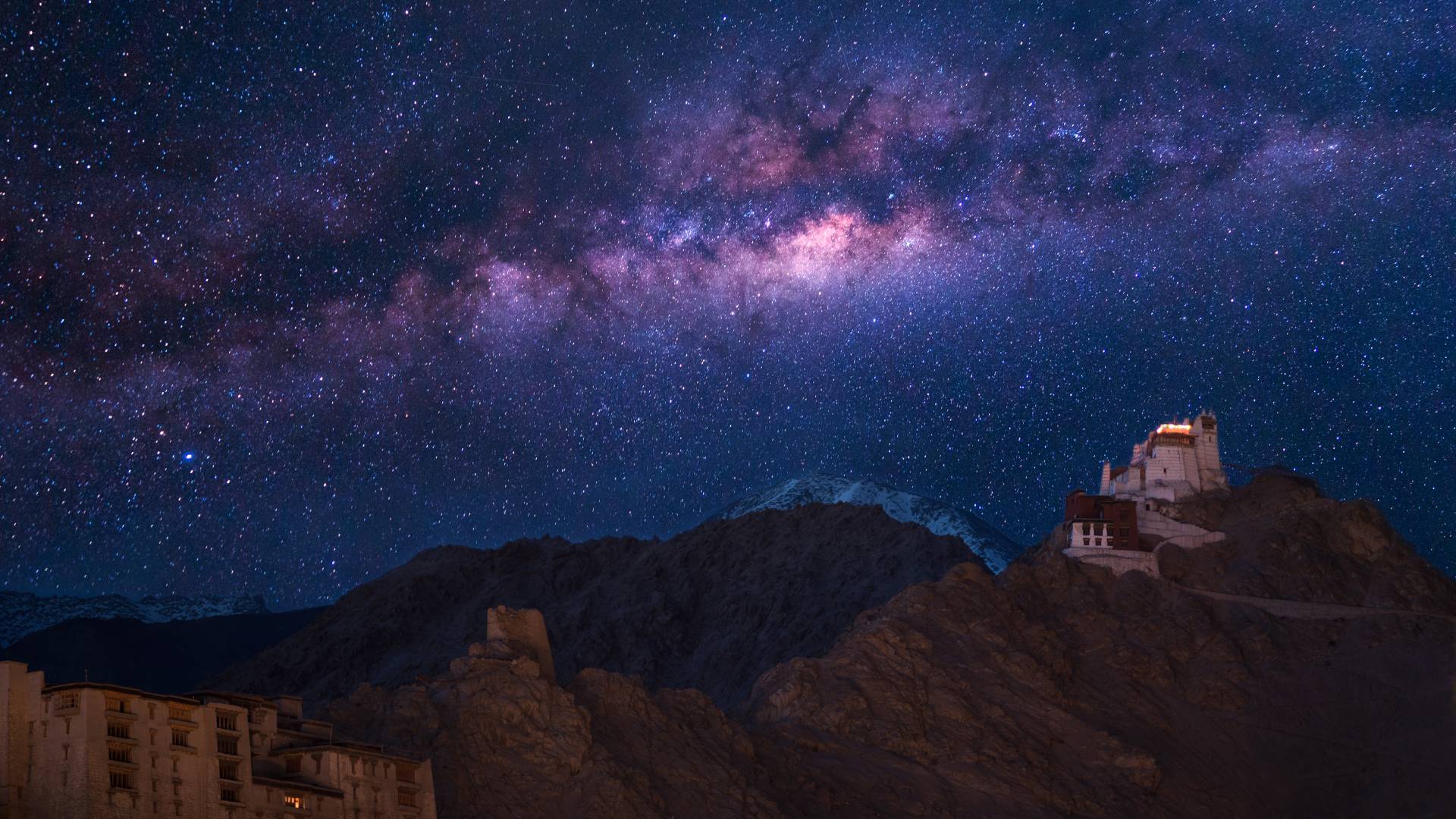
Hanle will always remain one of the world’s great destinations for astronomy, but it isn’t the only place where travellers can experience Ladakh’s remarkable night skies.
Whether you’re watching the Milky Way from the shores of Pangong Lake or listening to local stories beneath the stars in Phyang Village, these community-led experiences offer a different perspective on stargazing in Leh Ladakh, one that combines science, culture and hospitality in equal measure.
Explore Astrostays at Pangong Lake, Astro Retreat at Pangong Lake and Cosmohub to experience Ladakh after sunset and explore that the region’s greatest stories are not only found on the ground but also in the sky.